
Original post 1 December 2018:
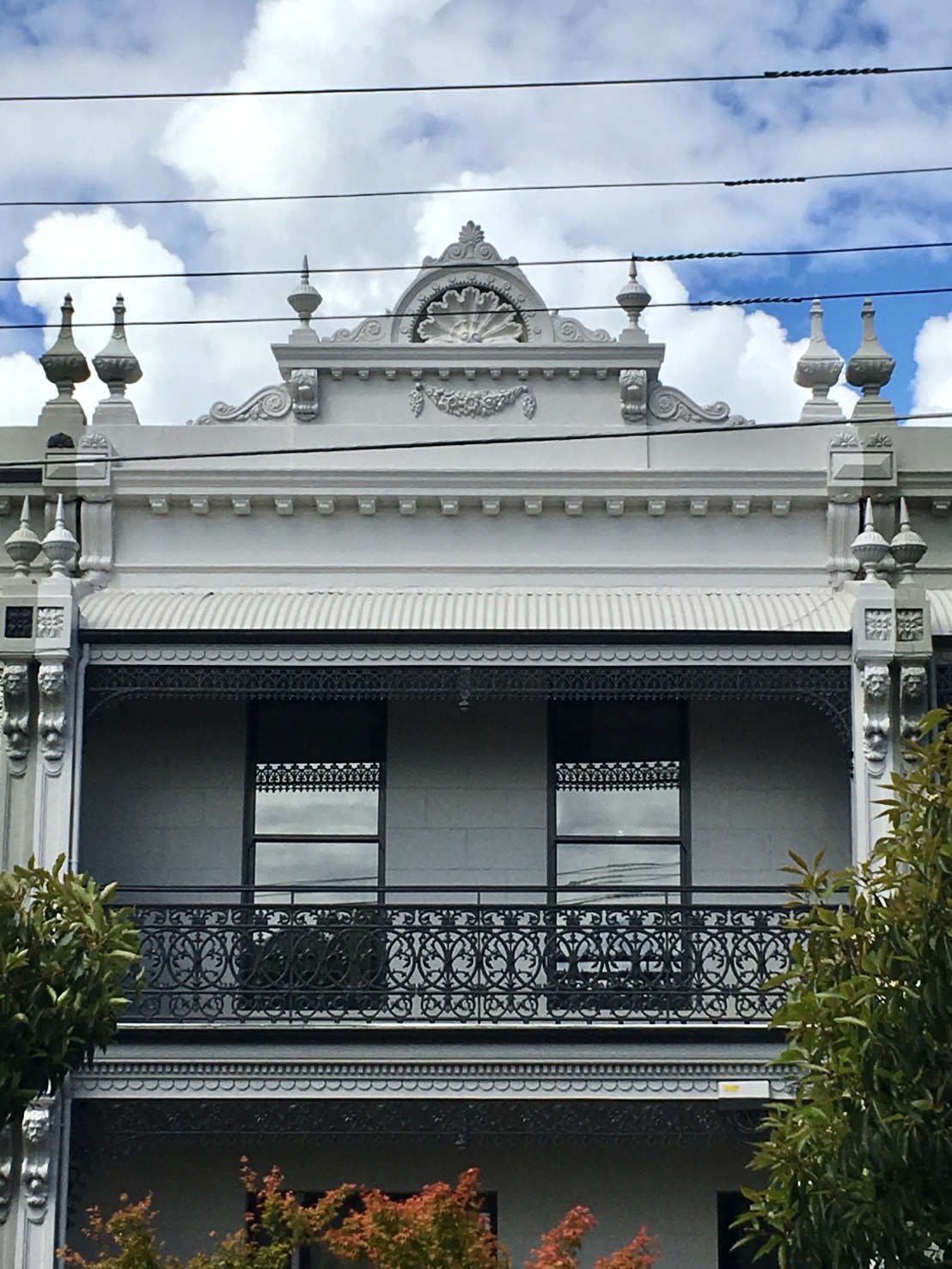
In Montague Street, #AlbertPark, there’s a set of great, elaborate #Victorian terraces; in fact there’s two blocks of them exactly the same, one a row of 8, the other 10. They’re mostly intact (though two seem to have had the parapets replaced with gabled roofs), but many urns have disappeared, a pretty common thing. They originally had two urns either side of the #clamshell on the #pediment, but they also each have separate wing walls, (when normally they’re shared, which creates more visual interest), and each of those is topped by more urns, both in front and up top, leading to double double urns, somehow not immediately obvious.

20 November 2024
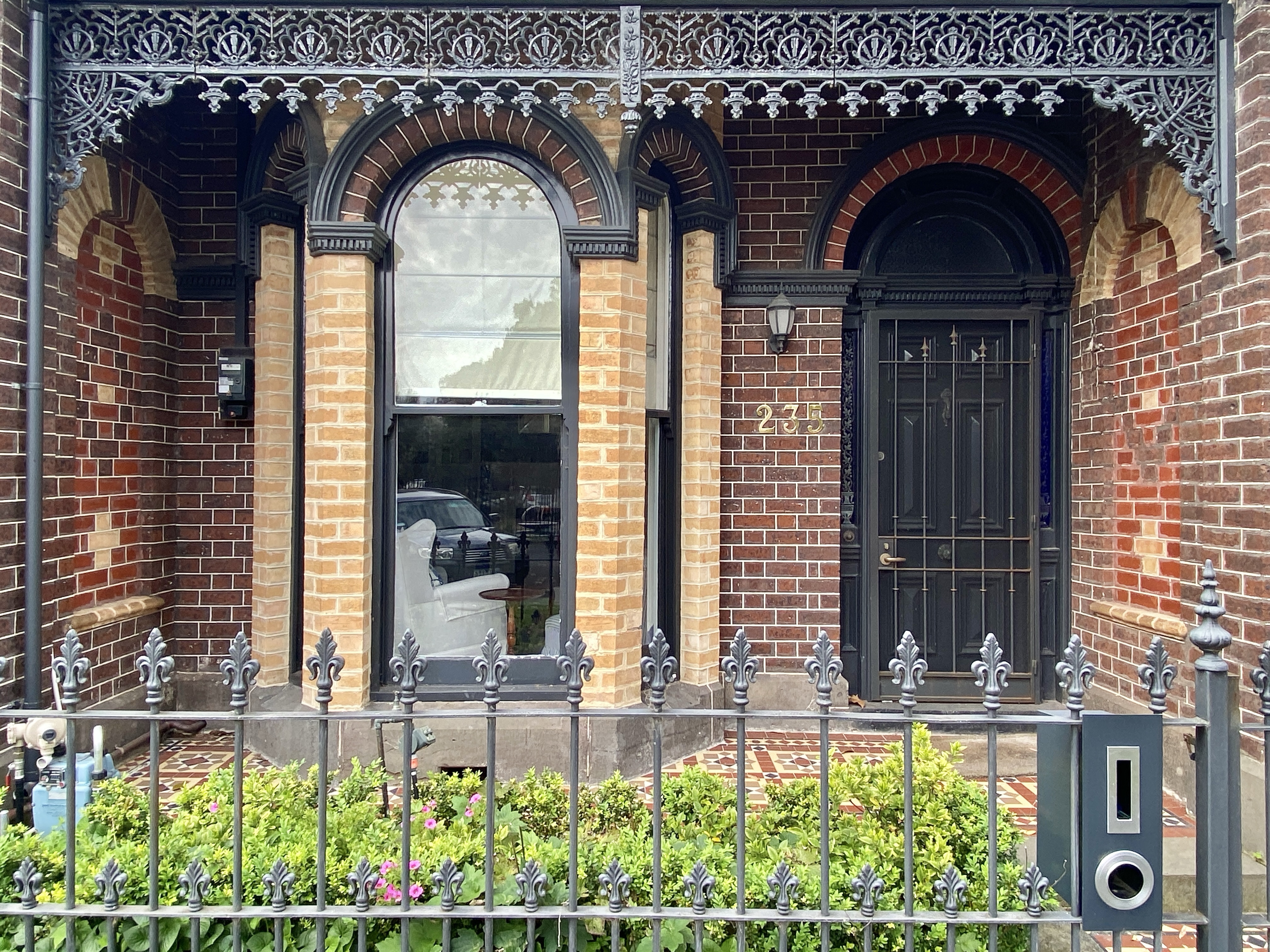
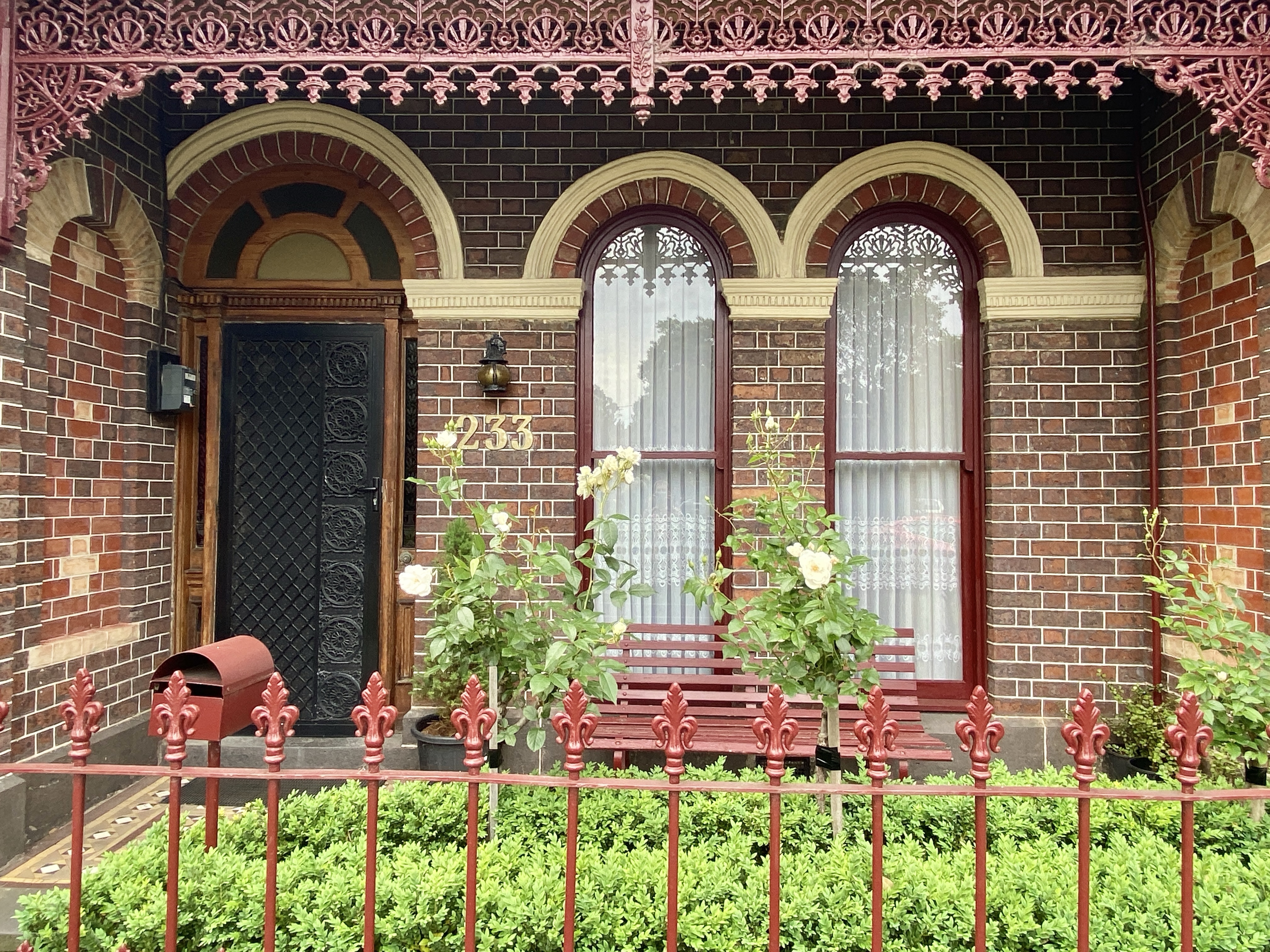
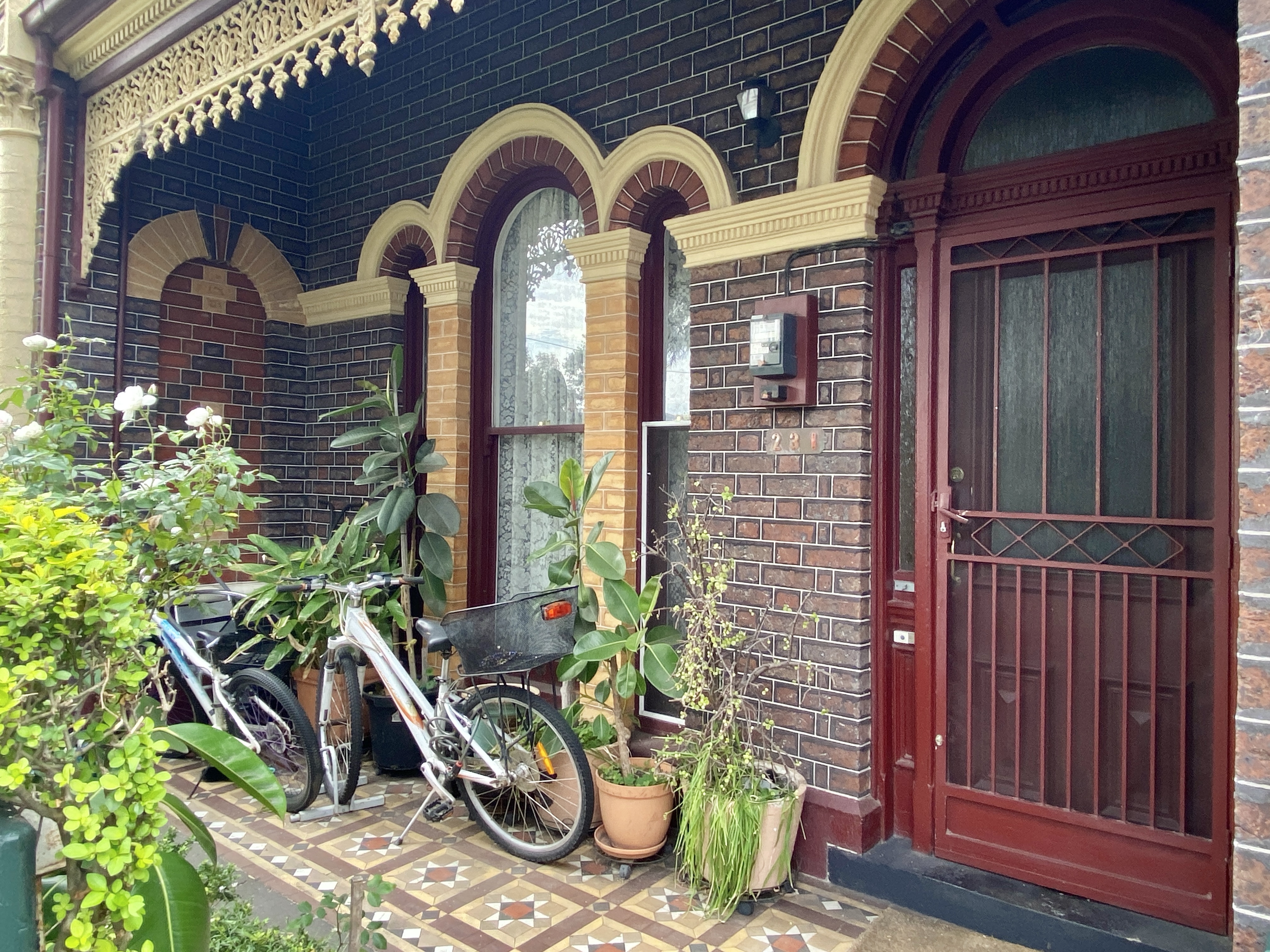
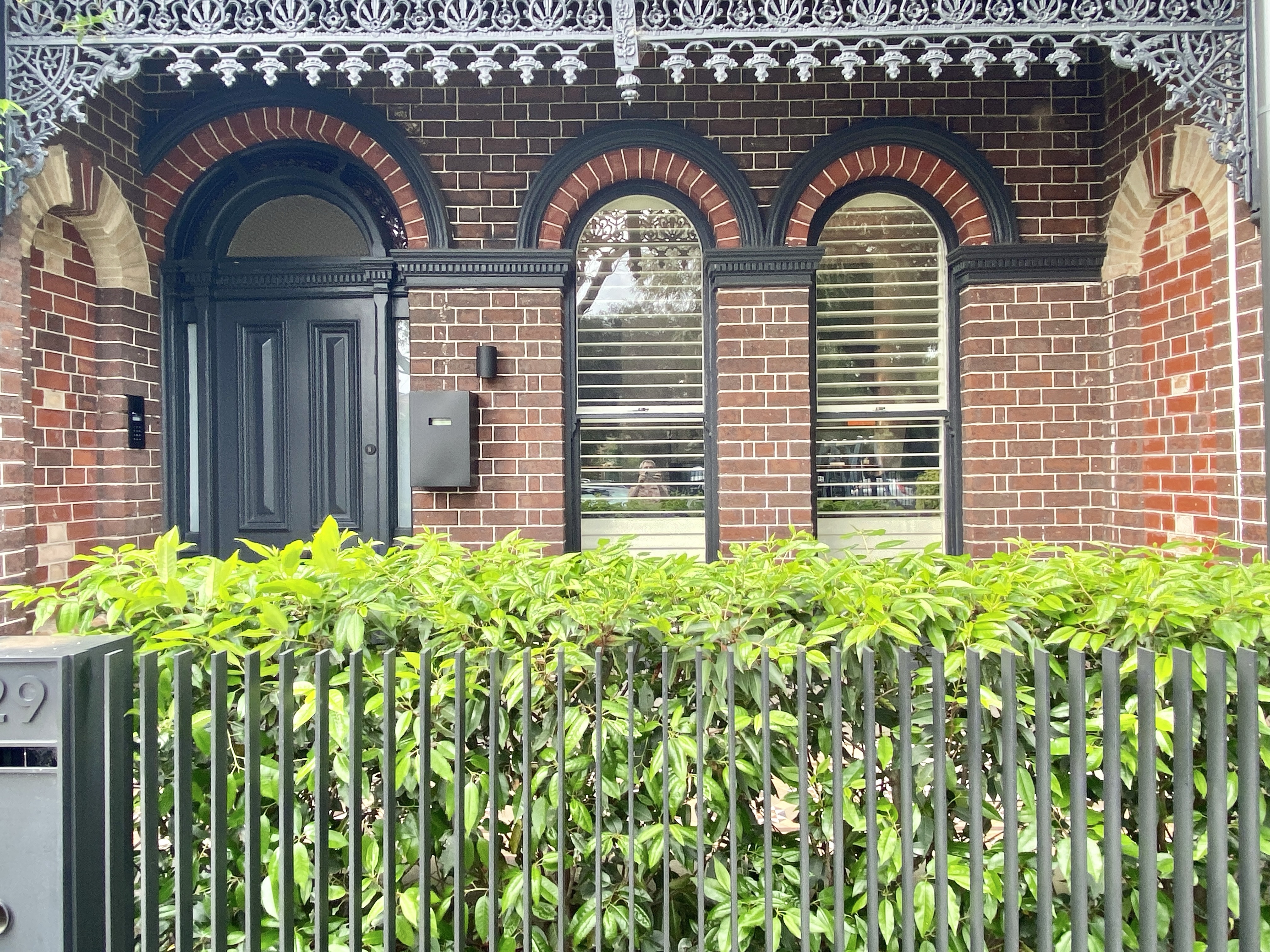
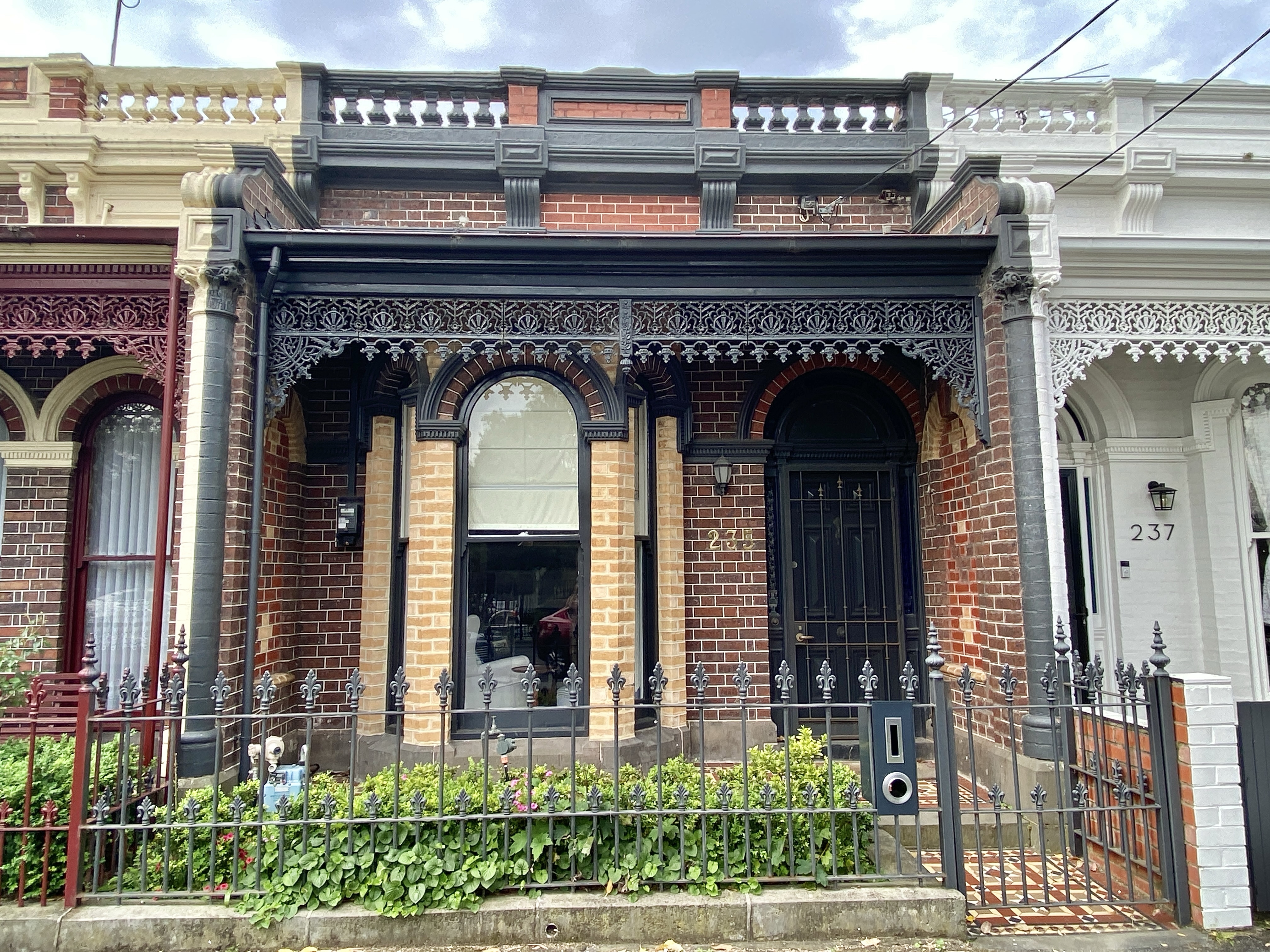
All nicely done up, complete with tuckpointing, this row of 8 terraces on Danks Street Albert Park has unusual variety – alternating plain with more elaborate windows, arranged symmetrically about the two central ones with bay windows. Only thing I don’t like is the black paint, the Victorians never used it, especially not on render, which would have been grey, or a sandstone colour.
20 November 2024
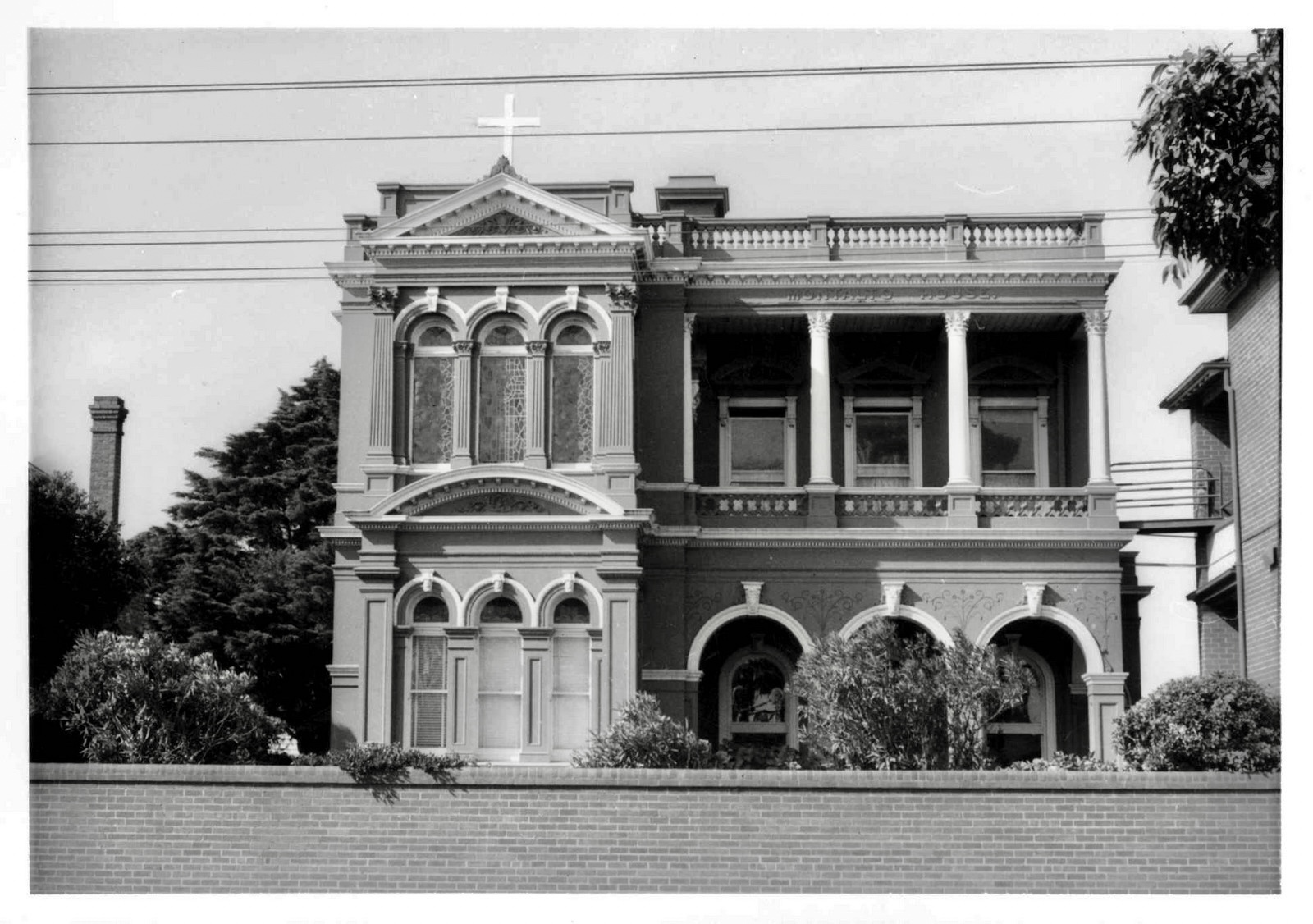
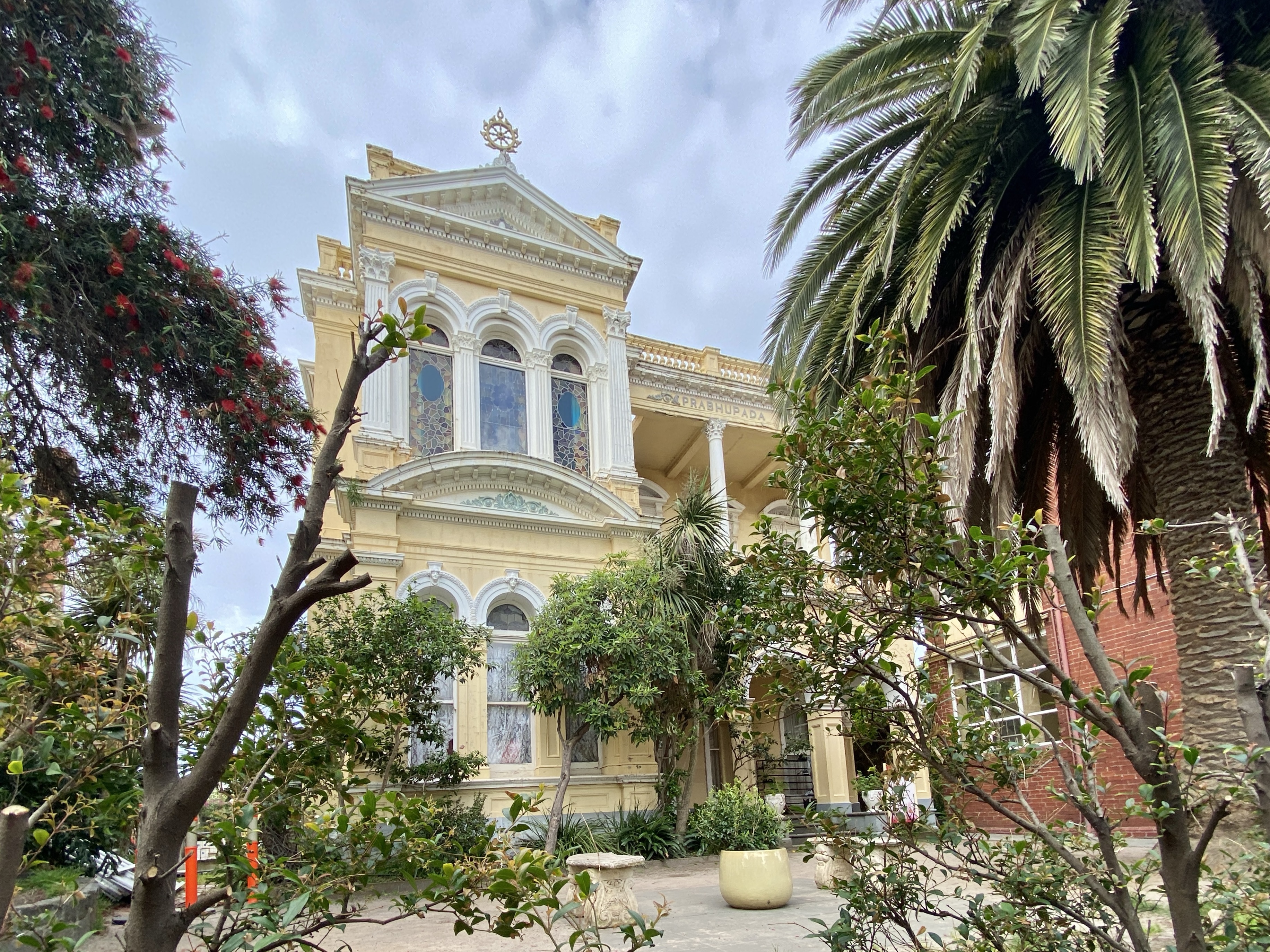
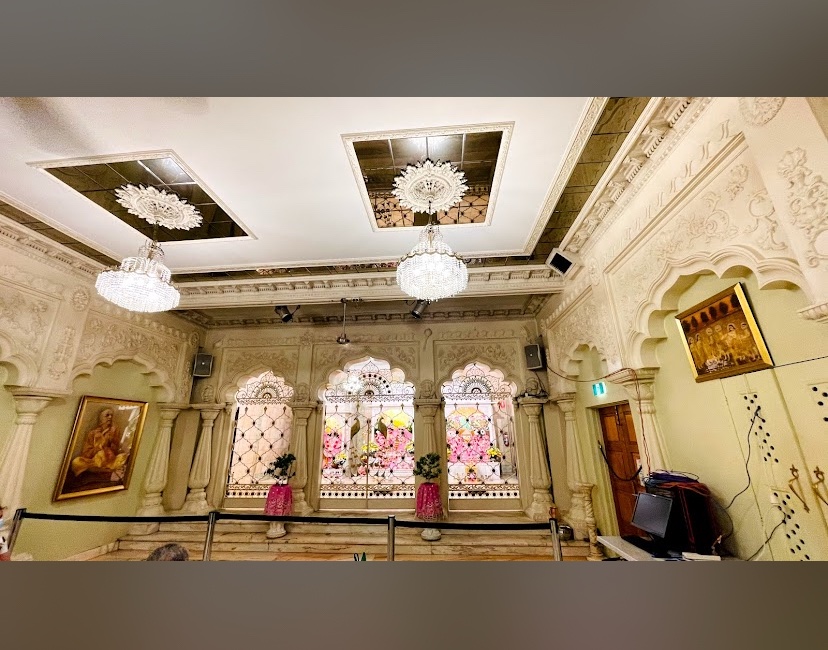
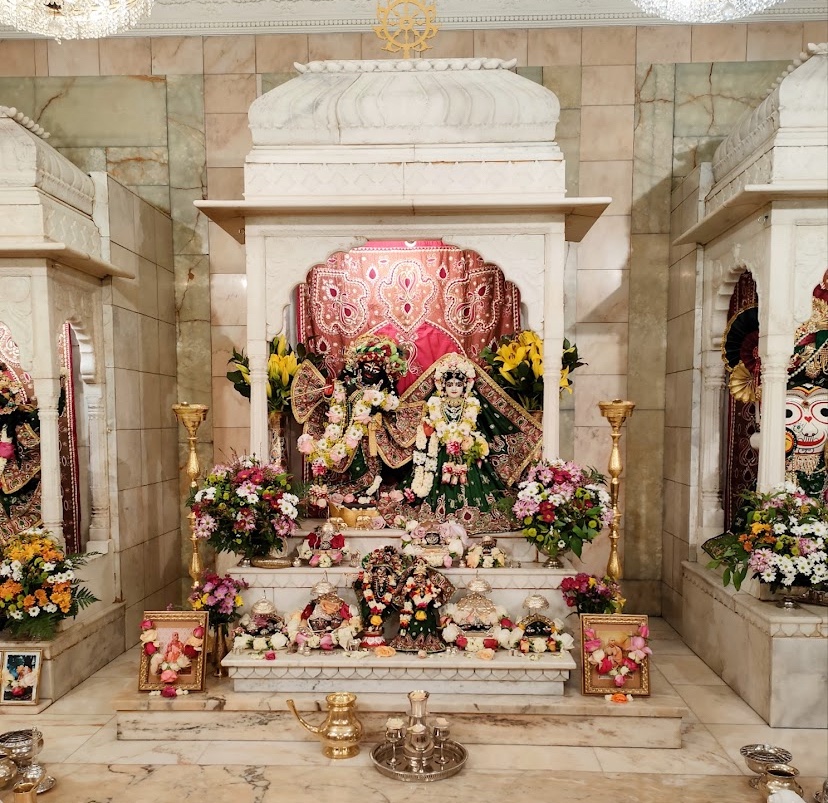
Amongst the Victorian and Edwardian terraces of Danks Street Albert Park, there’s this random mansion, now the well known Krishna temple, here since 1975. Looks pretty amazing inside, I should have gone in. Thought it’s history would be well researched, but not really – the Albert Park history group says it was ‘Montalto’, built in 1876 for Thomas Mouat, when it stood all alone ‘on the sand’ (mainly because the land around it wasn’t subdivided until the early 1880s). The MMBW plan of 1897 shows all the streets laid out, with a scattering of terraces, and also shows it was a small house. At about that time it was bought by James Alston, the successful inventor of the iconic rural iron windmill – he must have added this grand front, in the elaborate Italianate style popular ten years before. He decamped for the mansion Majella he built in St Kilda Road, and in 1916 it became Mt Carmel Boys School, and they added the red brick wing in 1925. So quite a back story. And a nice garden.


 Storey of Melbourne