
18 May 2024
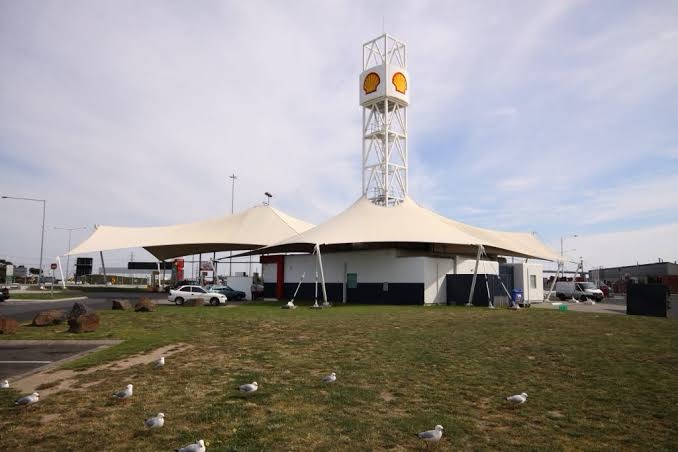
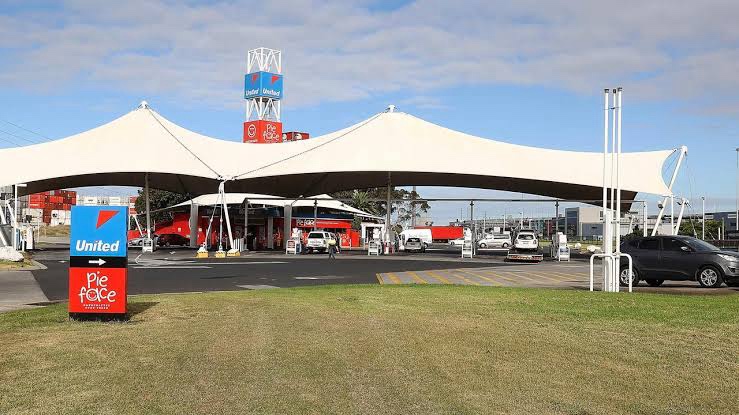
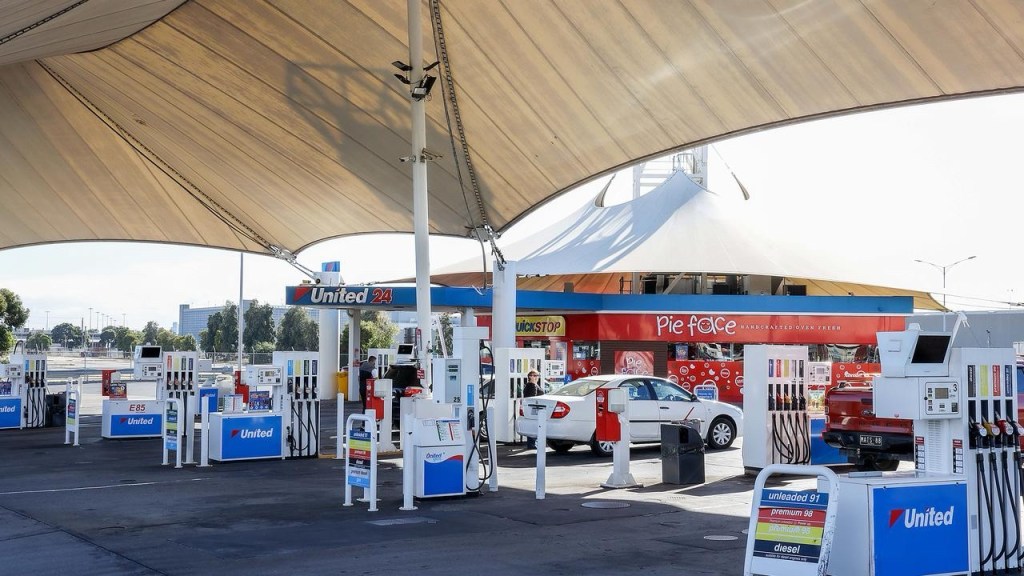
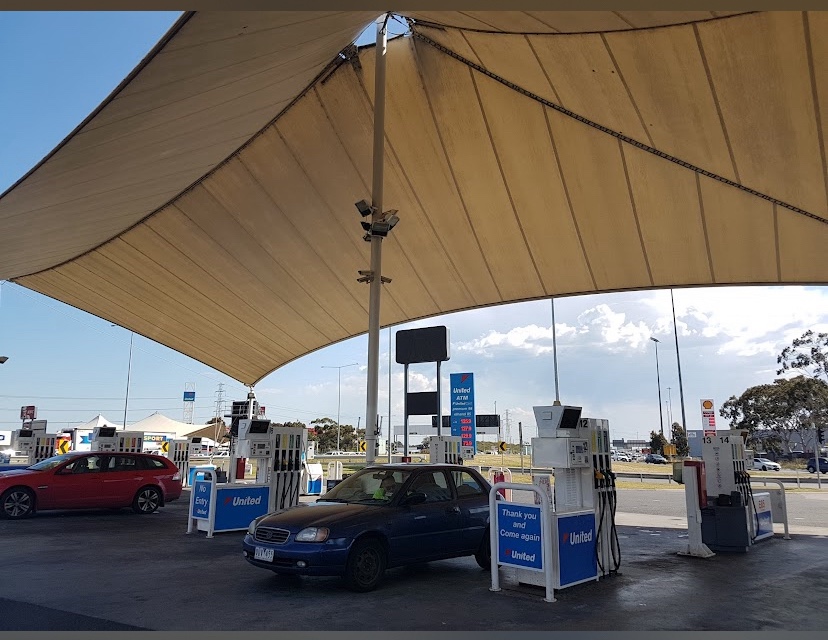
So the tent-like coverings of the service stations either side of the approach to the Westgate Bridge are proposed for heritage listing by the City of Melbourne. They’re not my favourite things, but I appreciate their uniqueness, so yes they should be listed. Cable roofs became a thing in the 1950s, and the 1959 Myer Music Bowl is a fine and early example (2nd last pic), and the white translucent tensile membrane version was developed by German architect Frei Otto, used first at Expo 67 in Montréal. Through the 70s they gained popularity and were actually used a lot from the 1980s, most for covered outdoor areas or stadiums rather than actual buildings. These ones were built by Shell in 1989, and intended to evoke sails, with the bay nearby (but not really). Their construction represented a change in policy by the Country Roads Board, which had not allowed service stations on its new highways and freeways, and for this first one they ran a competition amongst petrol companies, asking for “the Opera house amongst service stations”. The architects were Graham Law & Ass with tensile specialists Spacetech, and @tractconsultants landscaping and planning. The tent approach works rather well for shading the petrol bowsers; the fabric was thought to last 15 years but it’s still going, with patches. There’s another big example in Melbourne, the Grand Pavilion at the Showgrounds from 2005 (last pic). I notice most of comments in the Age article are all ‘this must be a joke’, I guess most people still think only pre WW2 places can be heritage. All info from the heritage report, and all photos from the Internet. Update : my Instagram post got four comments in favour, and five along the line of ‘this must be a joke’.




 Storey of Melbourne