
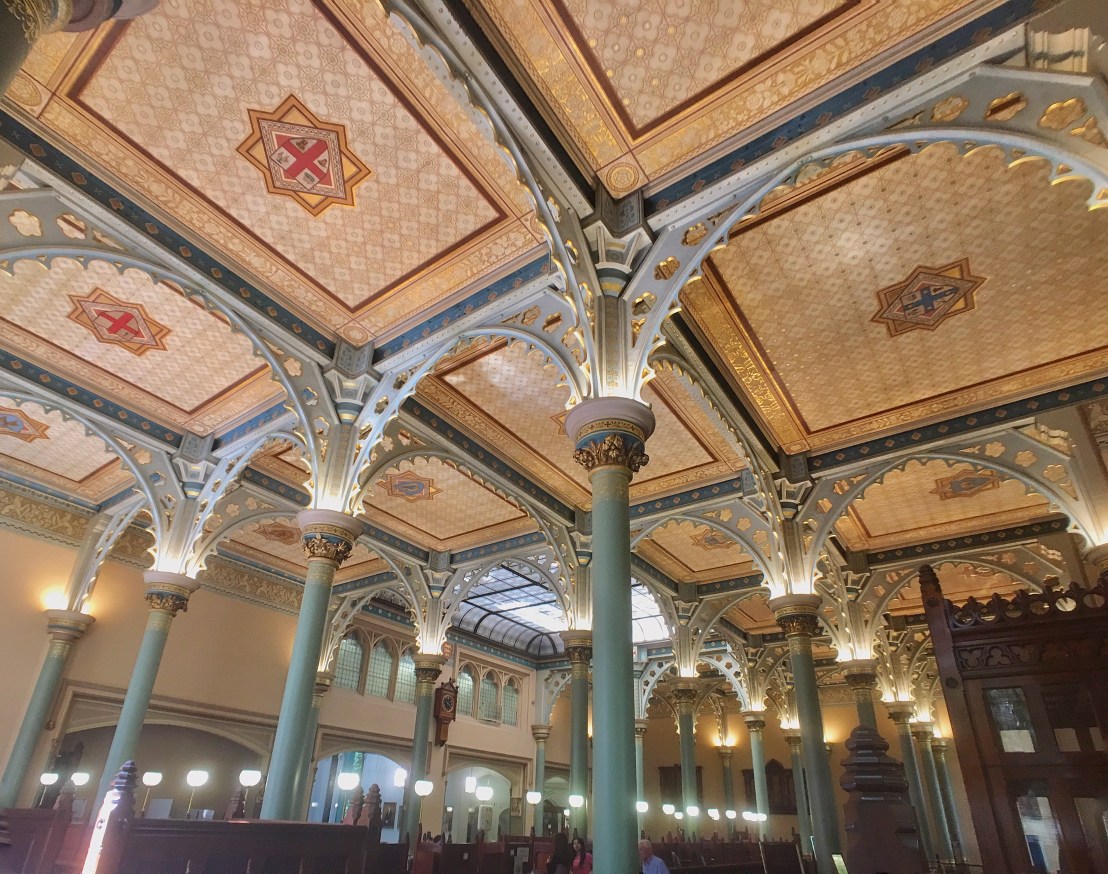
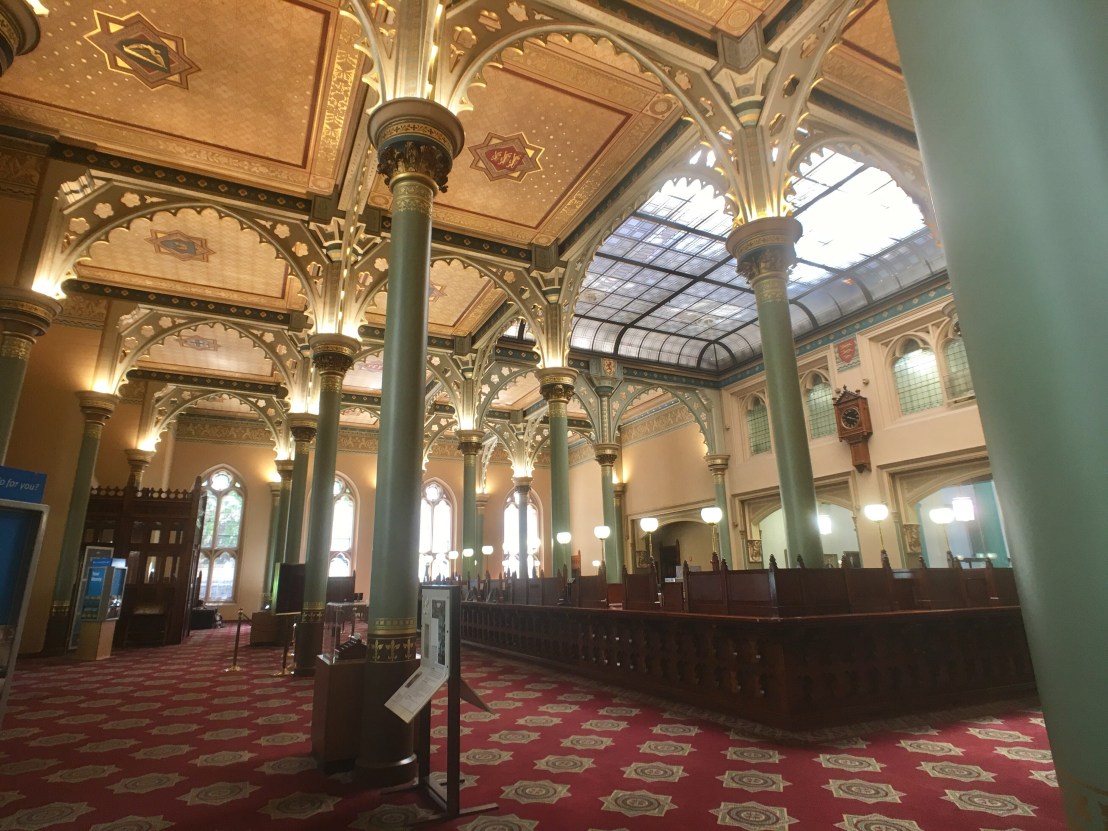
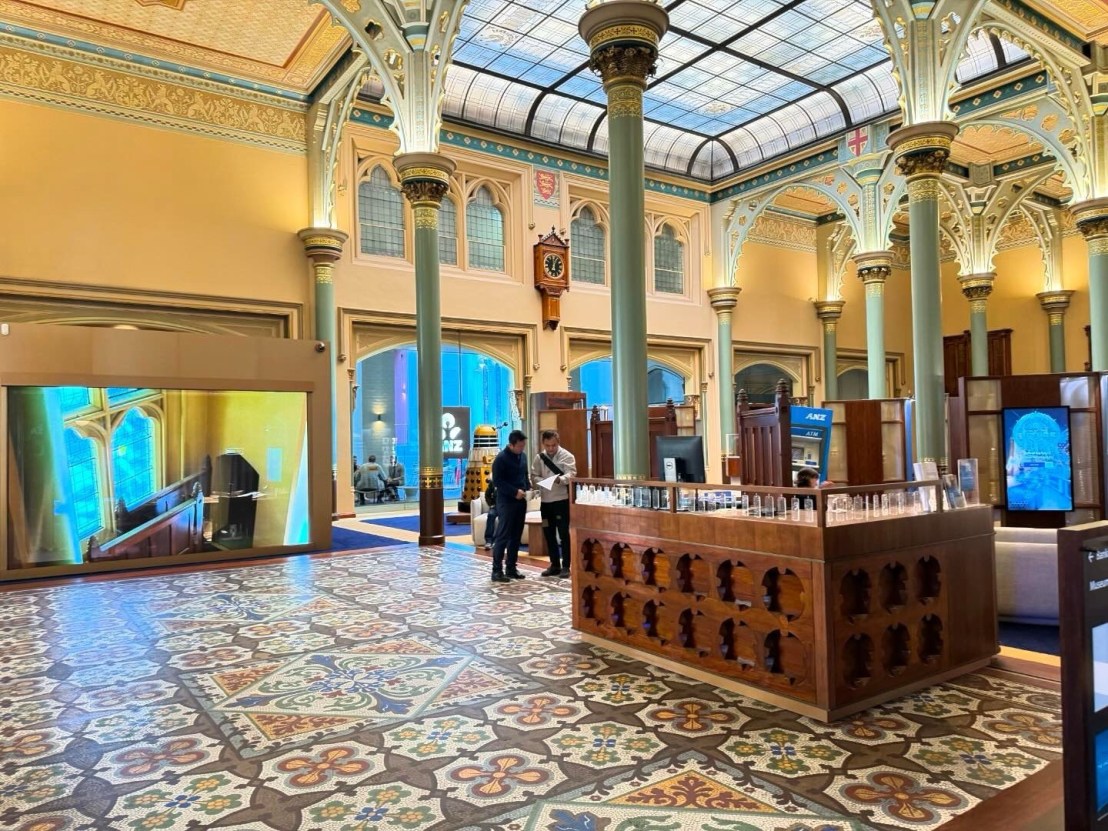
The 1887 #GothicBank chamber in all its glory; proof that Victorian interiors weren’t all gloomy (though plenty were). Lots of #goldleaf and #eaudenil (a pale aqua). Important to note that it’s now double the width it was originally; in 1887 it was a fairly intimate thing only three bays wide, with counters either side and no skylight; in 1923 when the bank bought the Stock Exchange next door they doubled it in size and exactly copied all the details ! Must’ve really loved it, which is fair enough.
They still do, having sold everything incl the 1993 tower to GPT group (for only $275mill) while keeping the #GothicBank itself (not sure if leased or subdivided) – the 2009 Docklands HQ and it’s new extension are pretty dull, a far cry from the artistic triumph of 140 years ago. Also, here’s my latest idea re the alterations – can we sacrifice a bay of the 1923 copy of the chamber so that a copy of the 1890 entry to the Stock Exchange can be built ? I’d say yes, no one would notice one bay less, and if done well, the recreated entrance would solve some problems and make a better complement to the Cathedral Room.
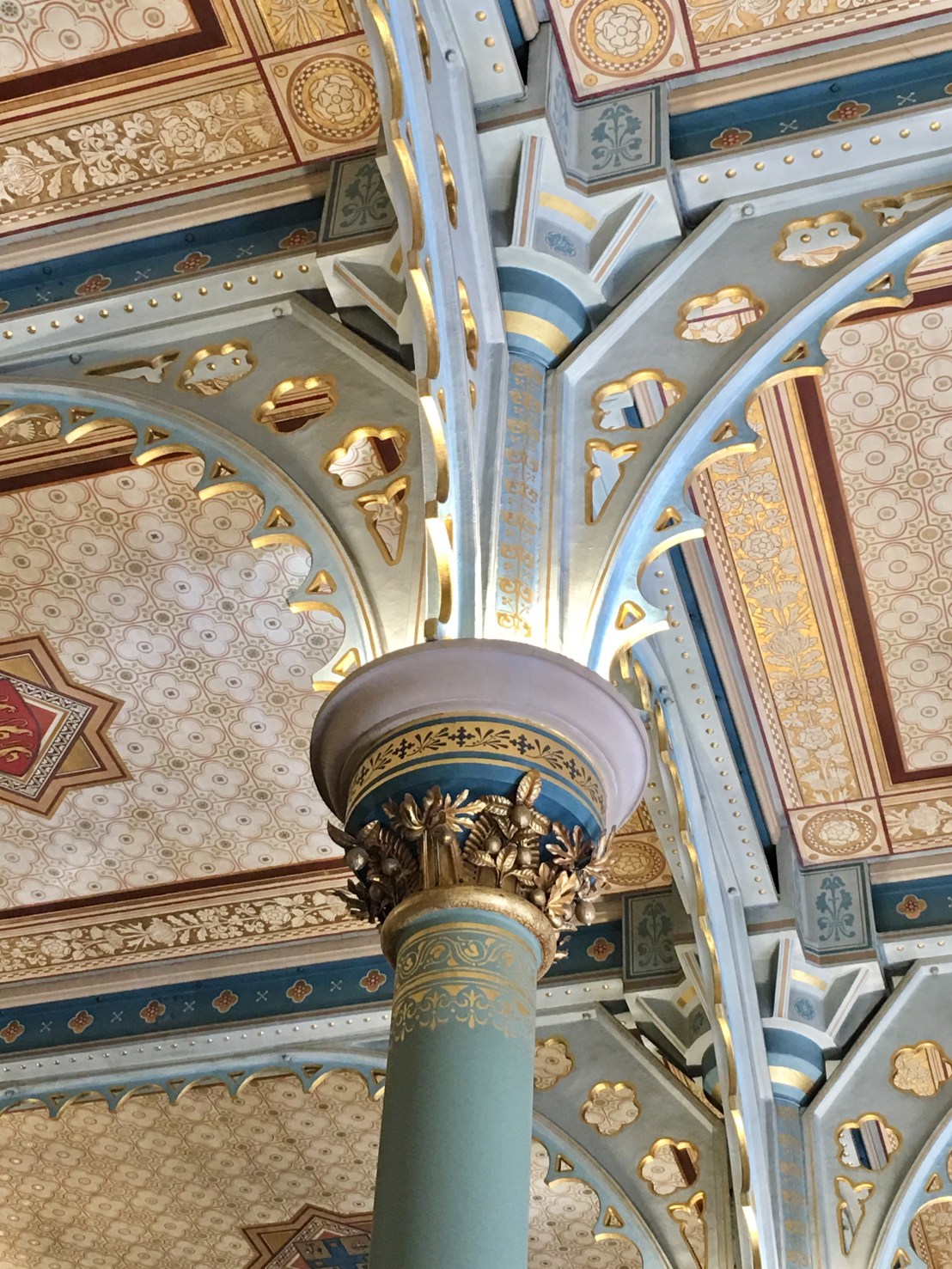
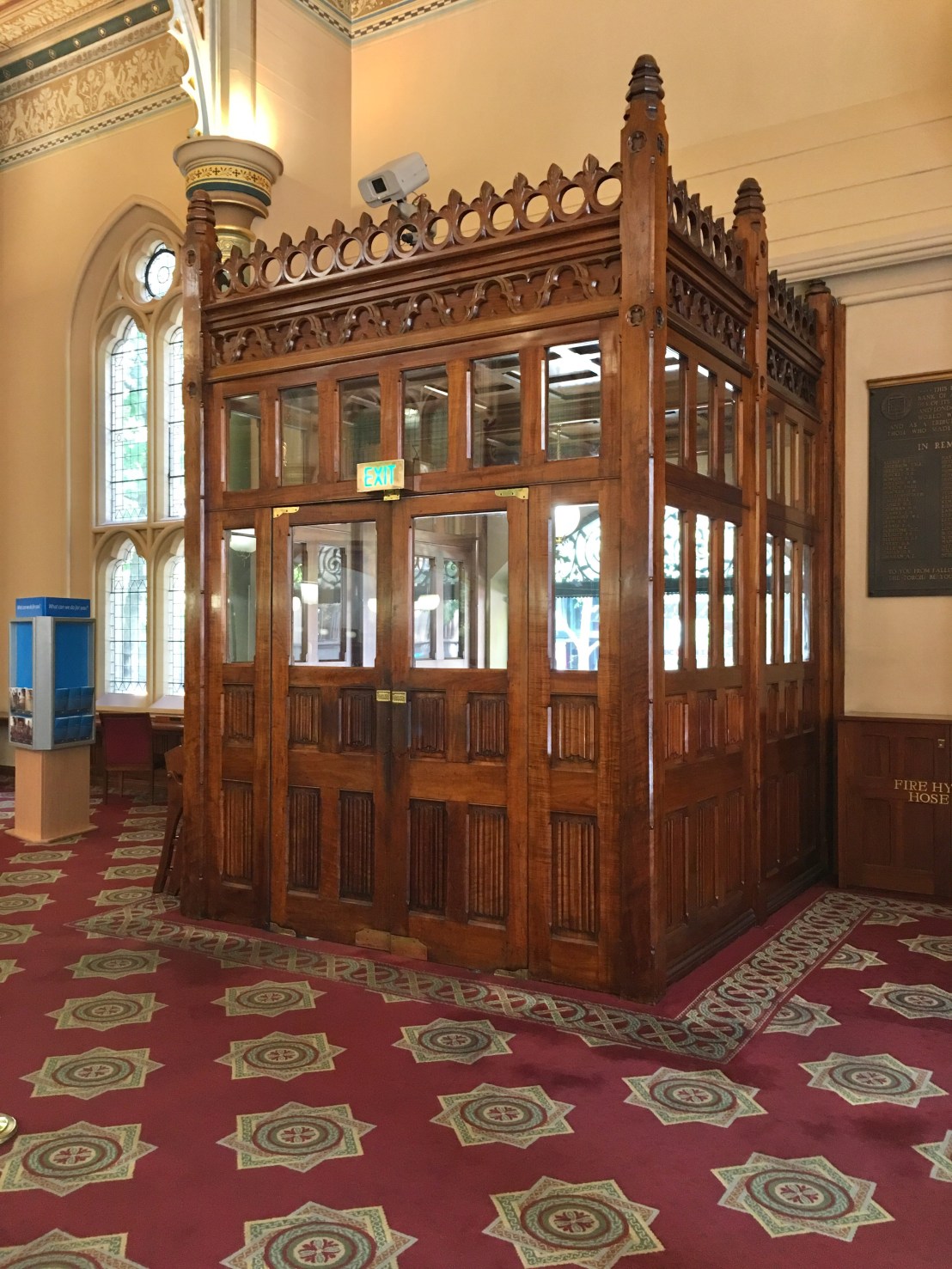
The #GothicBank chamber details are just amazing; each capital is finely sculpted ‘fruits of Australia’ (in beaten copper) each one different (I like the ferns, and there’s figs and wheat too), and there’s coats of arms for all the bits of the UK, eg the #harpofireland, and that great internal entry door-box-thing. Its not only delightful, but ‘proto-modern’- the #castiron and #wrought iron structure is clearly visible, posts and beams, even the #rivets are picked out in #goldleaf ! I guess the angled struts / #pointedarch things arnt that structural, but they’re great. #WilliamWardell was a genius, or possibly it was bank chair #SirGeorgeVerdon who is often credited as co-designer who cane up with that detail. Very #Ruskinian.


10 May 2024:
Very surprised to see that the actual banking chamber of the fabulous Gothic Bank has now lost most of its 1922 polished blackwood counters, with just sections left here and there. They’ve also pulled up the carpet to reveal the tiled area of the original 1887 chamber, which was half the size of the current one – it was enlarged in 1922, replicating all the decorative details. The Age article about it quotes the architect from @foolscapstudio saying ‘it’s been restored to its former glory’, but it looks like a mess to me. They restored some of the ceiling details, but the carpet is way too bold, and cabinets for their historical collection are dotted here and there. I guess banks just don’t use counters any more. Photos borrowed from Kenneth Park on Facebook, and old ones from the internet.



May 2026
Finally made it into the ES&A Gothic Bank chamber, cnr Collins & Queen, redone 2 years ago as an advice place and museum rather than a bank – it’s worth a few posts, but first, the tiles. This is the floor of the original banking chamber, designed by the architect William Wardell (or possibly the bank manager himself George Verdon), laid down around 1886. They been covered over probably since 1921 when the chamber was more than doubled in size, in matching style – pic 3 is the original size.
I think it’s pretty amazing – I mean apart from the Block Arcade there aren’t too many this large, and unlike that one, this is in medieval patterns (but not something you’d actually find in a medieval building). It’s rather geometrical, with a grid of alternating cloverleafs, and three large diagonal squares with 4 large fleur-de-lis. Found a reference that they were made by Minton’s in the UK, who produced huge amounts of encaustic ceramic tiles (colour goes right through). They’re also larger than usual mosaic, some specially shaped, and there’s lots of colour, making it seem somehow rather modern.
Fairly large parts were missing or damaged, so the ANZ bank commissioned International Conservation Services to repair it, and they remade 100,000 tiles (which sounds like way too many). There’s a display cabinet about it, with a photo showing the damaged sections and some sample tiles. I think you can tell which bits are new, they look darker, but I could be wrong.
And then there’s the counters, in very chunky dark polished timber – some 1886, some 1923, when they were rearranged as a rectangular counter under the skylight introduced then, and have now been separated into various bits as counters, dividers, and supports for some of the ANZ museum displays.


