September 2026
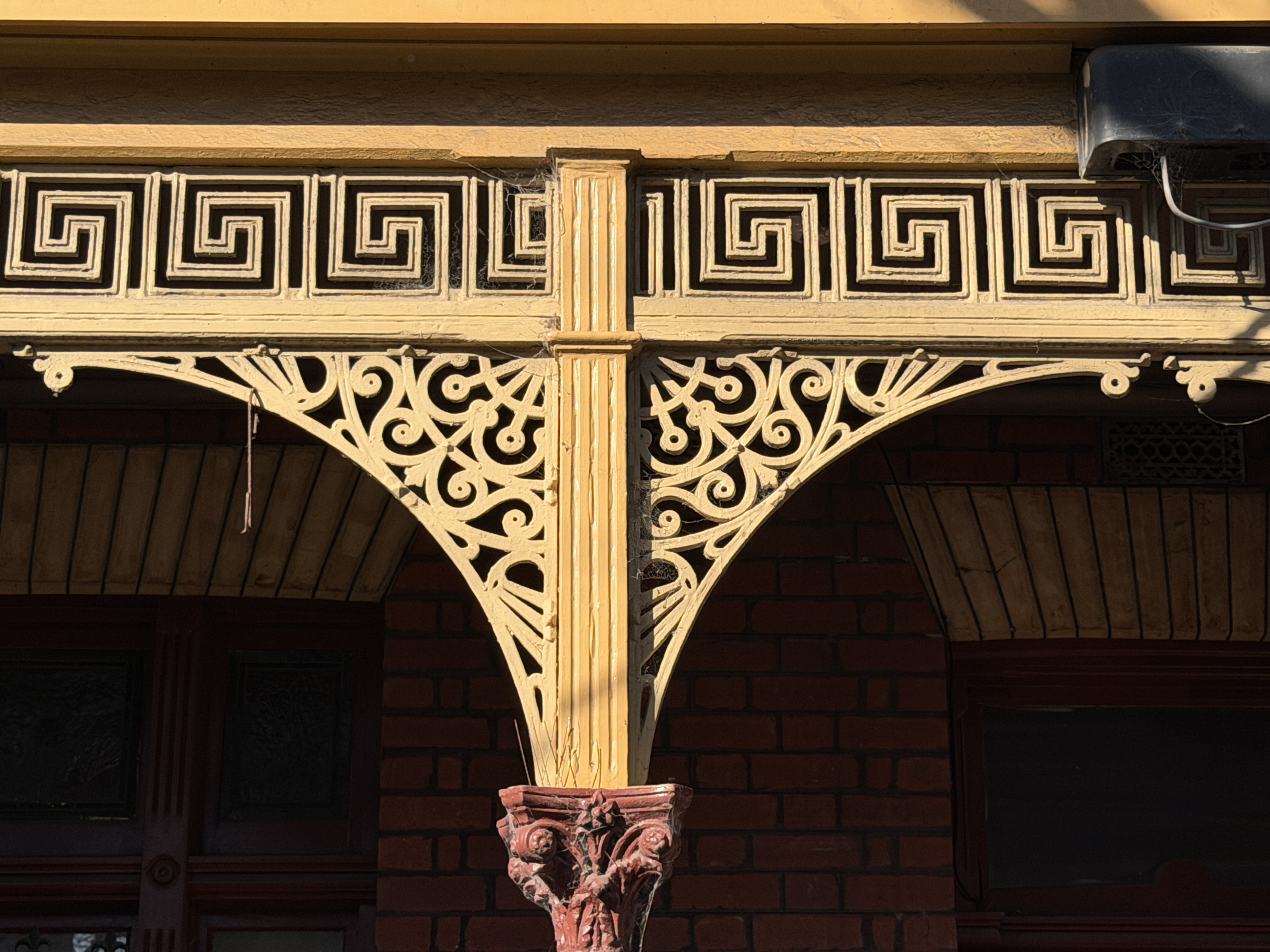
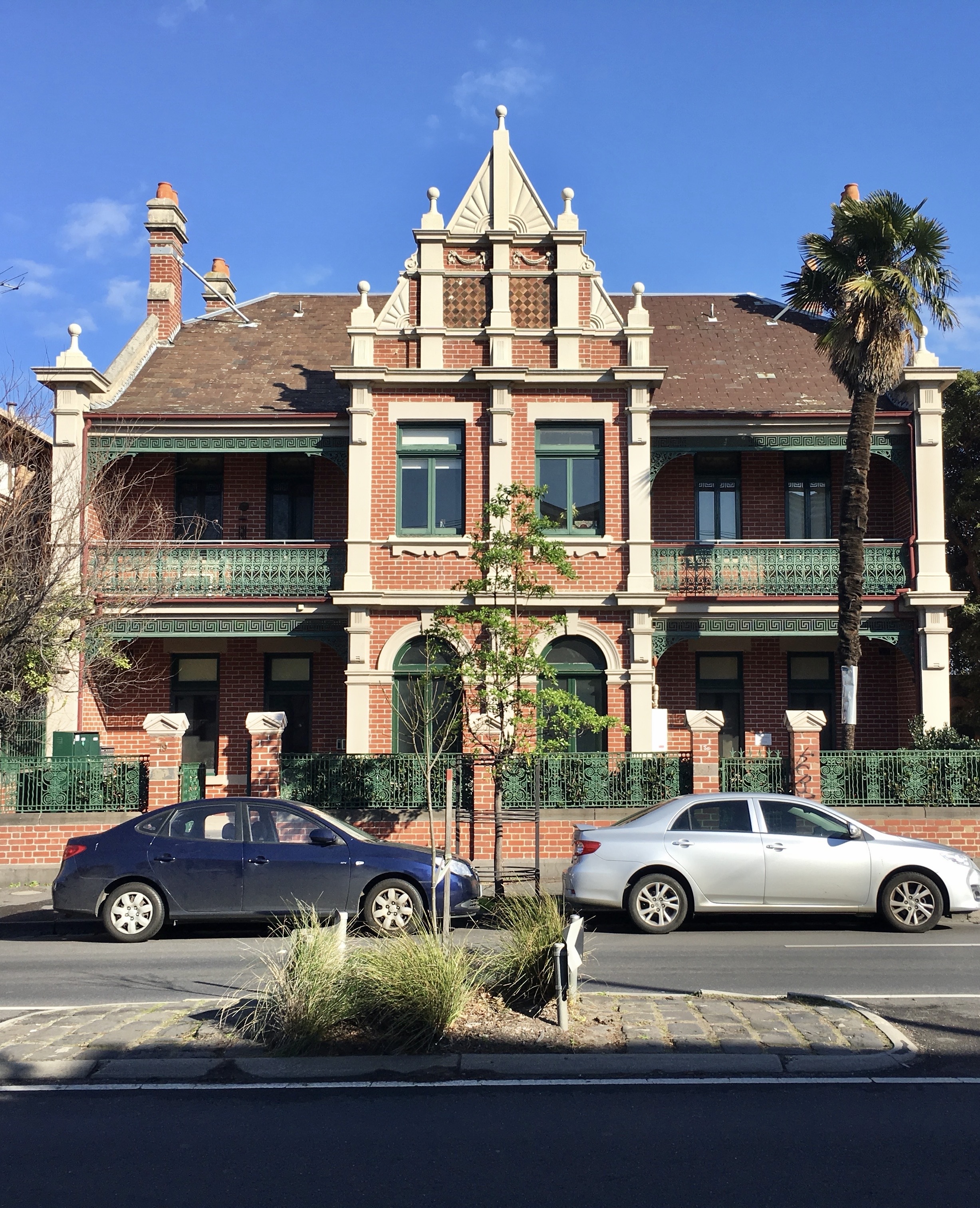
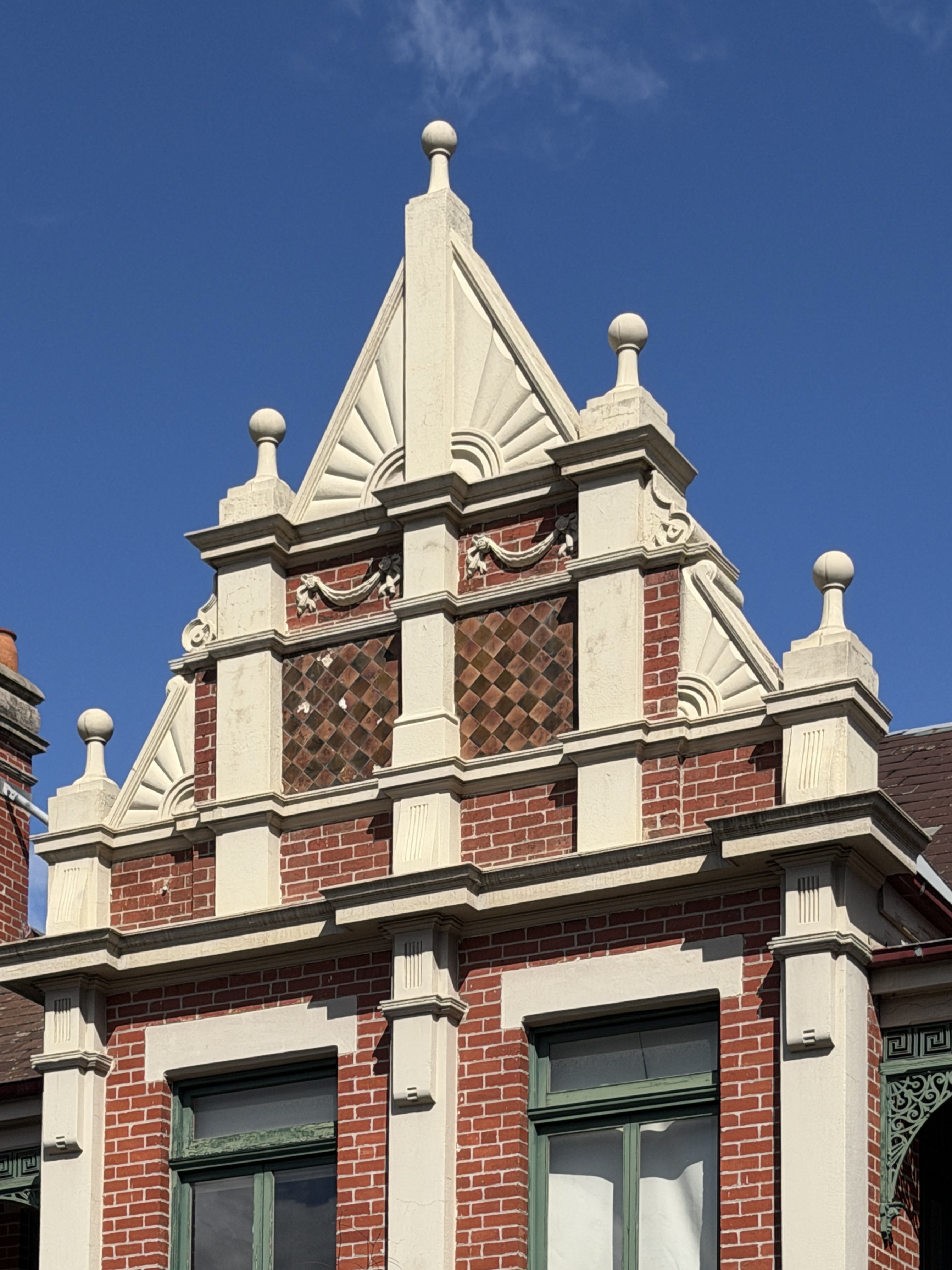
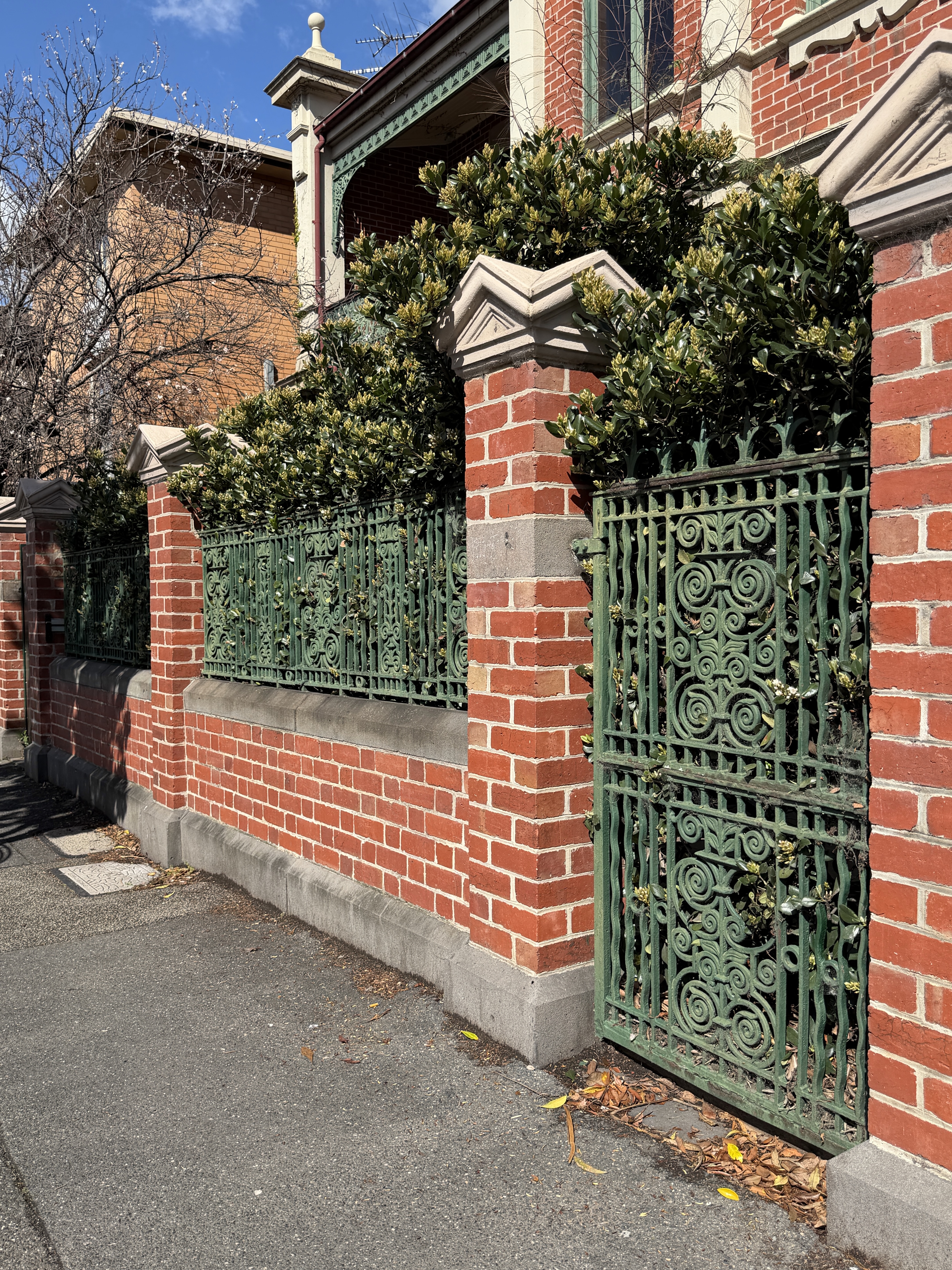
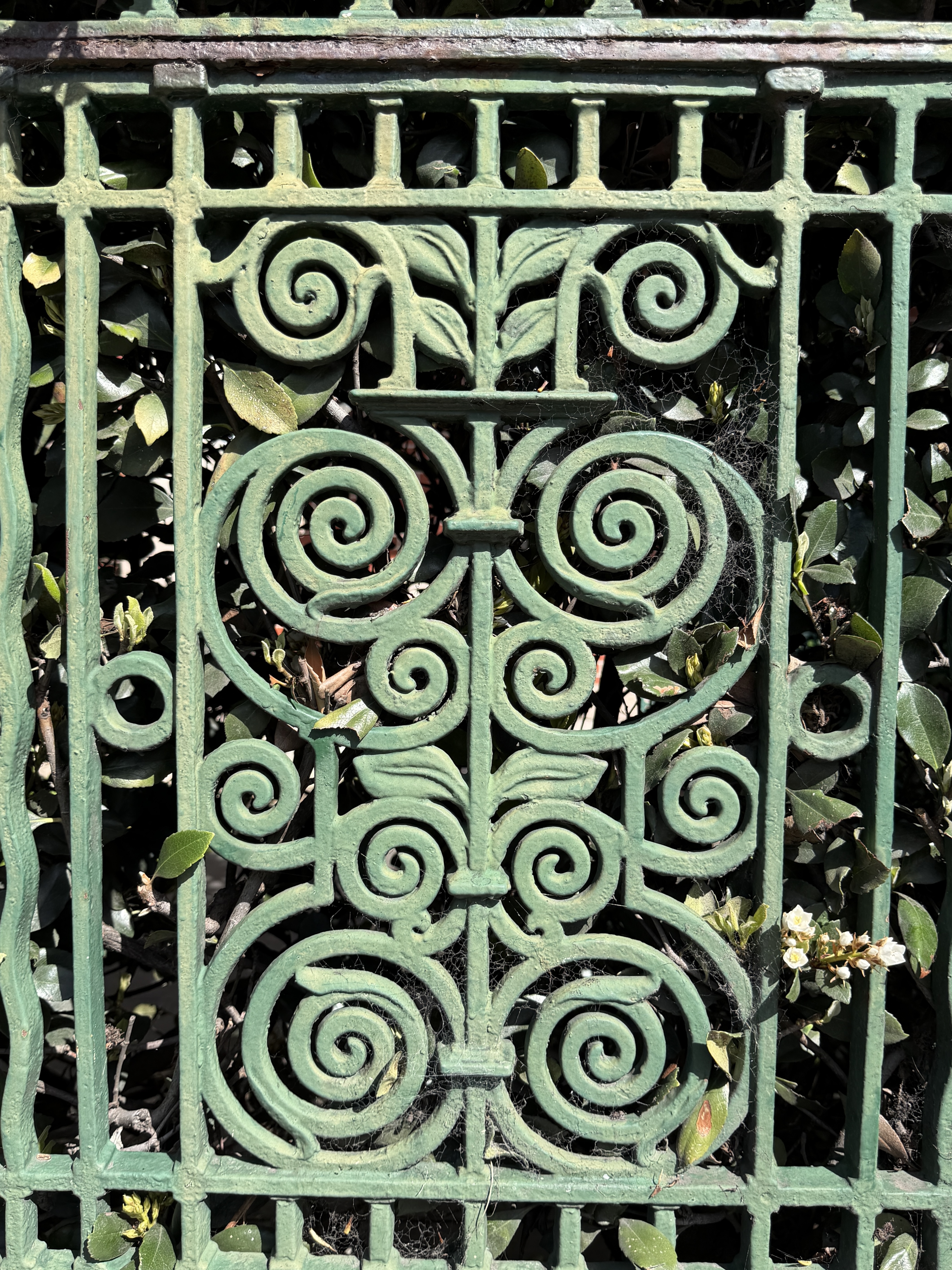
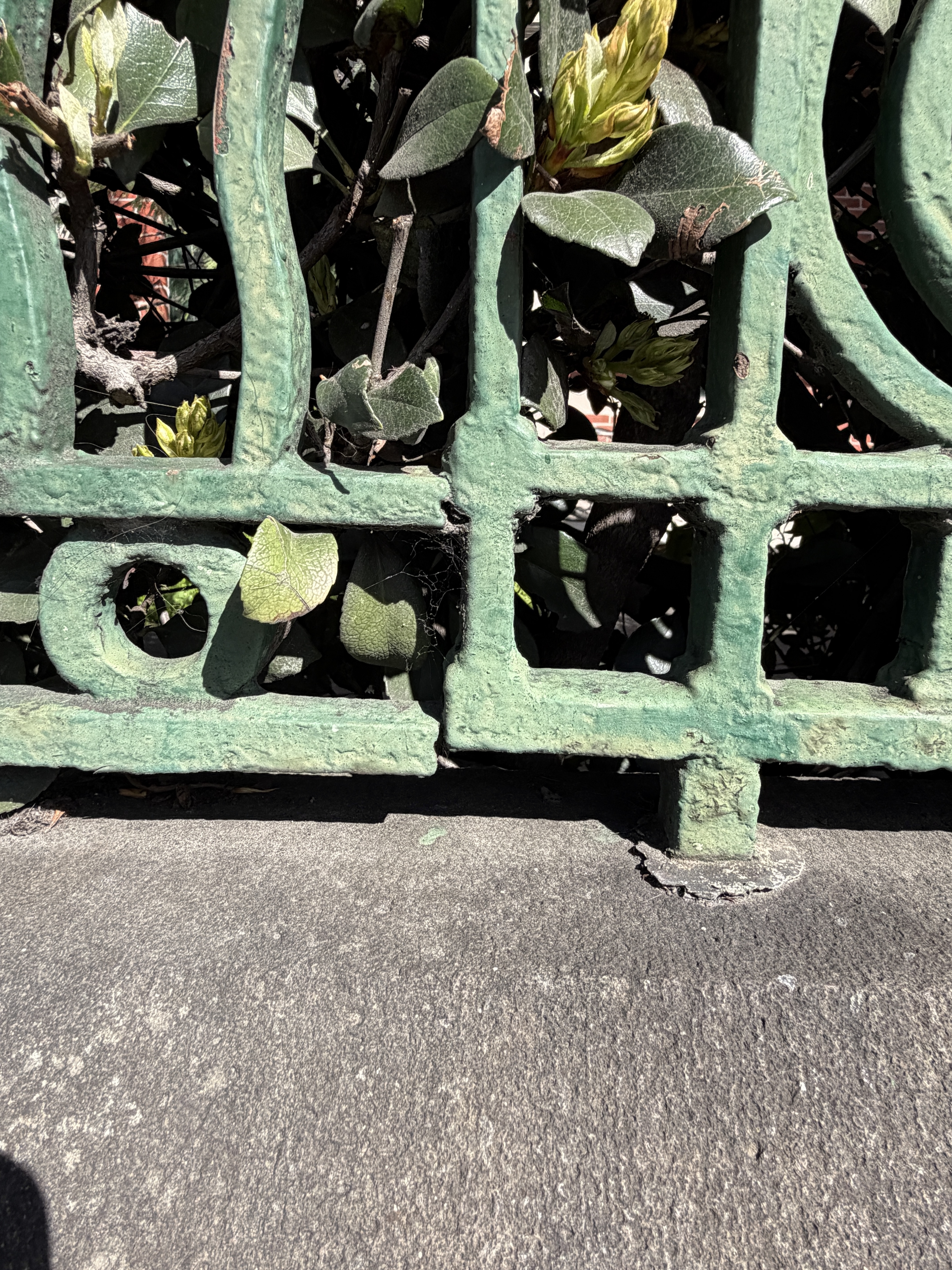
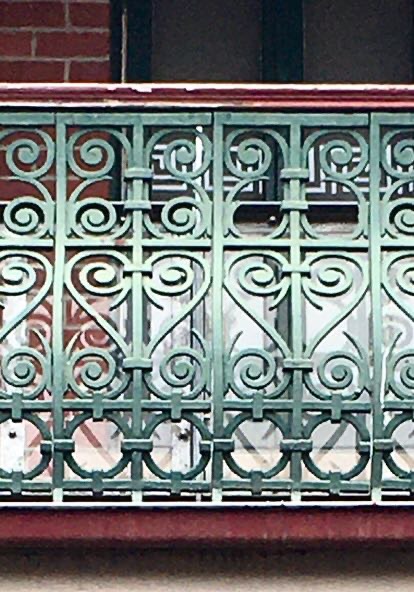
Always liked this boldly Queen Anne terrace pair on Grey Street in St Kilda. They’ve got that high pointy pediment with sunburst and swags against plain red brick, and down below there’s all that cast iron, made to look like wrought iron complete with protruding collar/ties (but you can see the joints between the panels). Must have been specially commissioned.
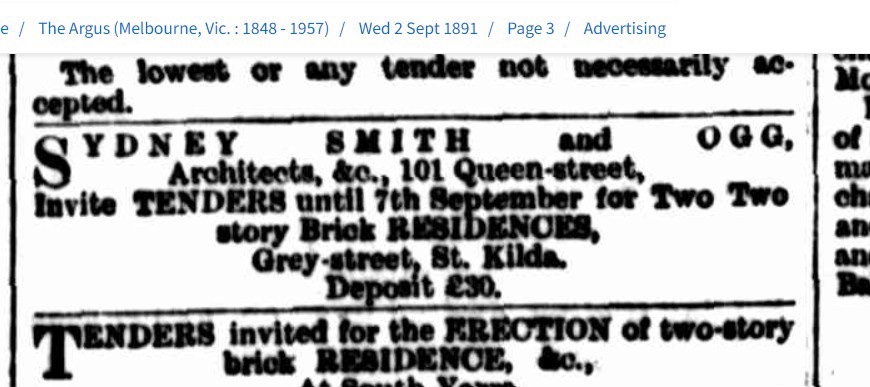
They’re on the heritage register as a good example of the style, with a known client, Gavin Shaw who lived next door, and date of 1892 but no architect – but think I’ve found them ! A tender by Sydney Smith & Ogg, right date, and Sydney’s father had done Mr Shaws house 20 years before. The firm had only just started, known for their many pubs in the 1910s and 20s, but I found a few projects from c1890, all Queen Anne as well, so another indication. Oh, just remembered they also did two sets of matching terraces in Cecil Street, South Melbourne, 1891, also Queen Anne, and uses the same cast iron at ground level.
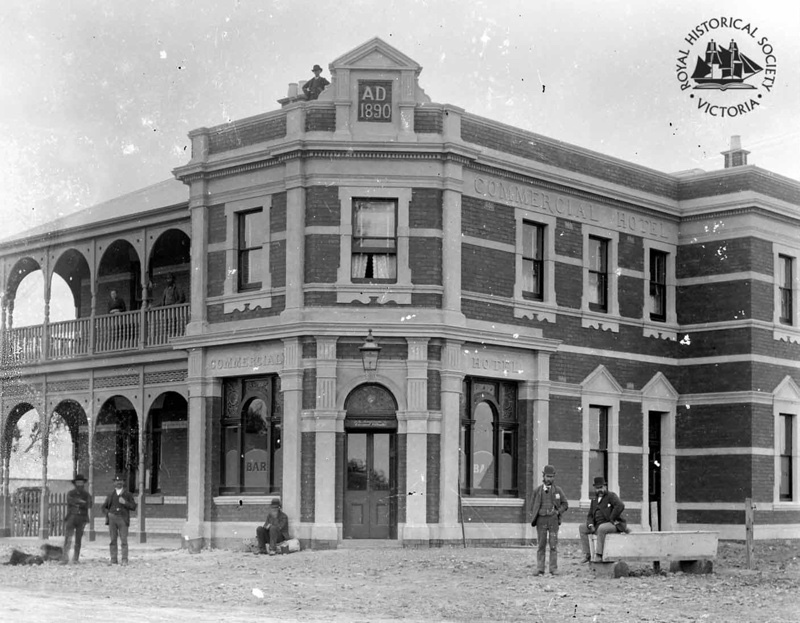
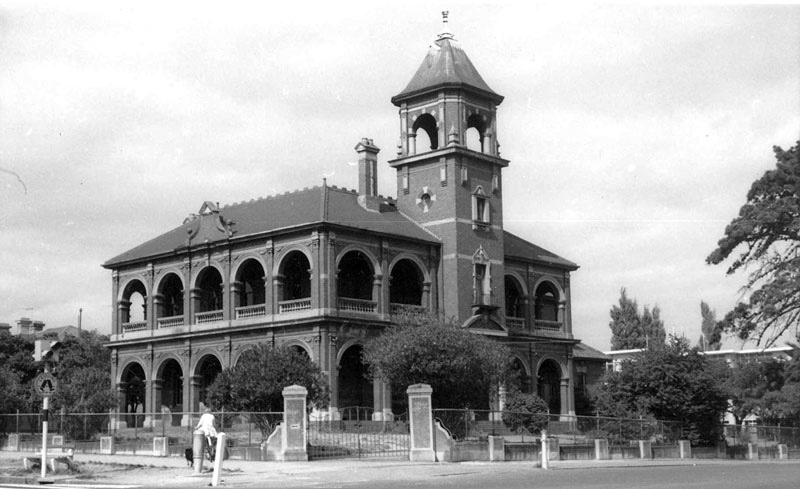
They include the Commercial Hotel in Sth Morang (still there) and the long gone Windsor Fire Station, as well as an extravagant mansion design for my own place that was never built. And that somehow led me another tender notice for a house in the corner of Dandenong and Westbury, which I knew was the long demolished Holmesdale, also Queen Anne style, and quite a pile ! (last pic). Another one where the architect wasn’t known. So thanks to the wonderful resource of the National Libraries Tove service, always more to discover.
The terraces appear to be a rooming house now, but very well kept. Their only other claim to fame is that the right hand one was a boarding house run by Mrs Stern from 1895 where Helena Rubinstein lived for a few years from 1901 just as she was starting her skin care business.
Update: a commenter tells me he lived there when it was a boarding house, and it was then sold to St Kilda Community Housing. Their Annual Report for 2011 says it was extended and turned into 34 studio flats.
July 2018
10 February 2020
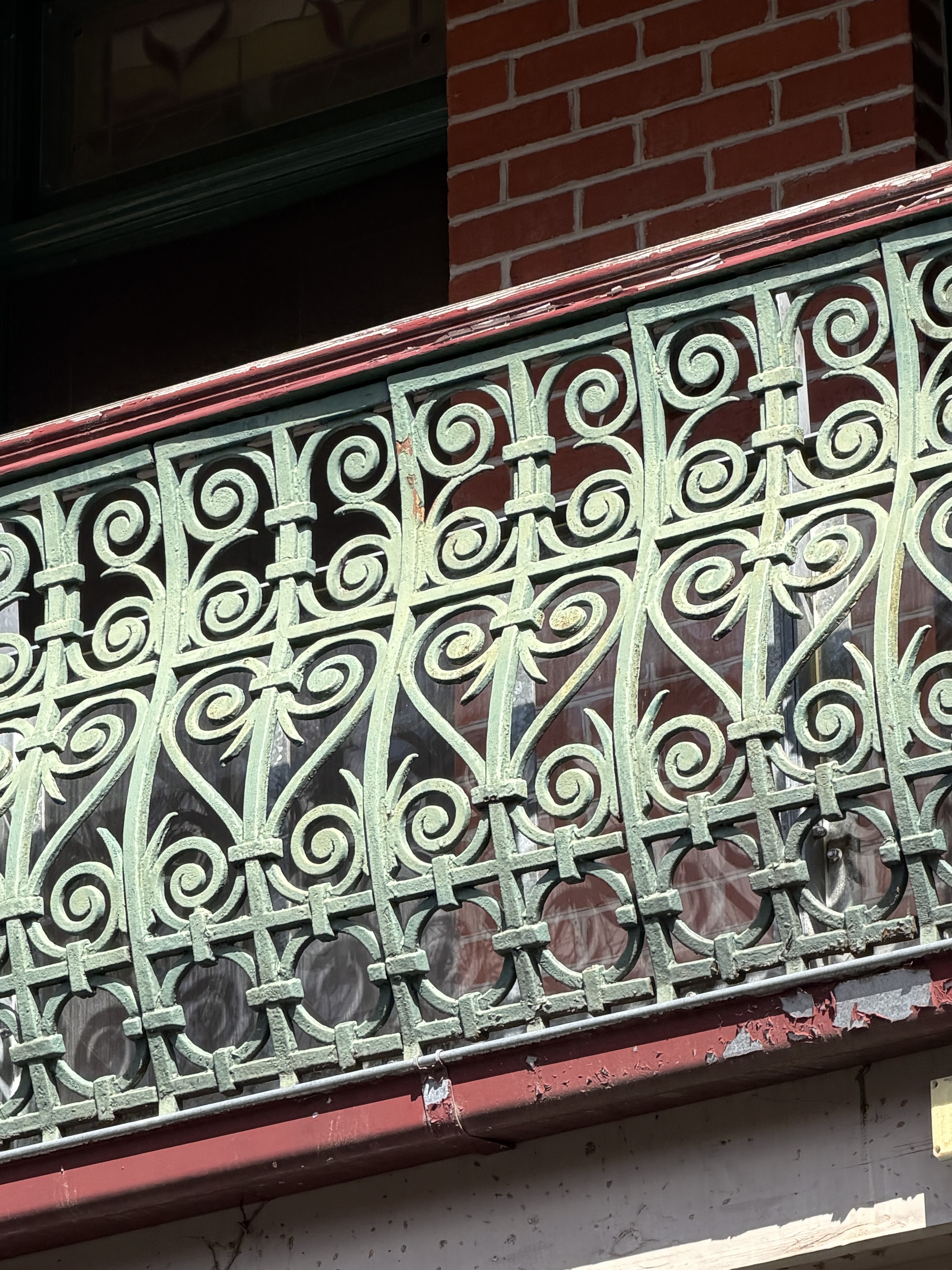
The gate and fence of this 1892 #QueenAnneStyle terrace pair on #GreyStreetStKilda seems to have both ! The gate appears to be actual wrought iron, with curled square bars, joined by those ties in the middle – or it might just be cast iron imitating wrought iron – which the balustrade panels above definitely are doing, you can see the joins running through the ‘ties’. Fascinating.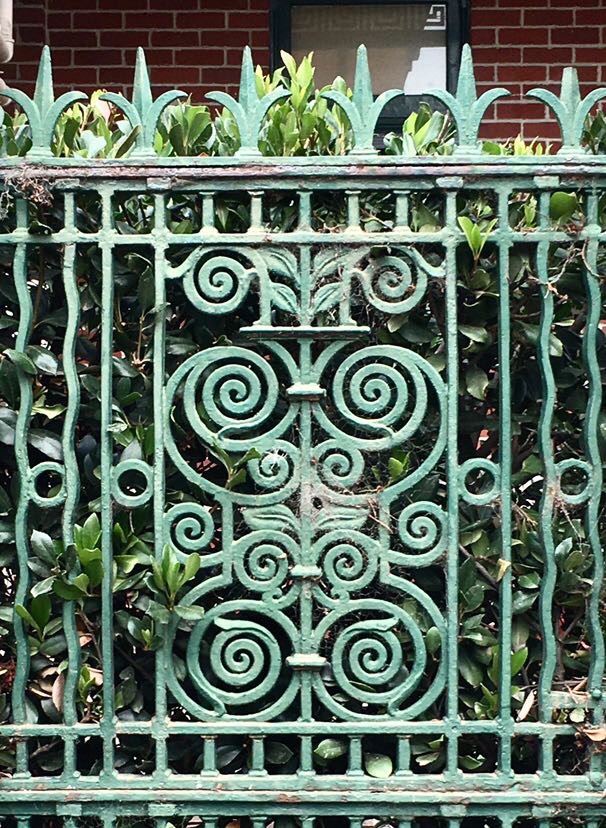


1891 terraces in South Melbourne