October 2025
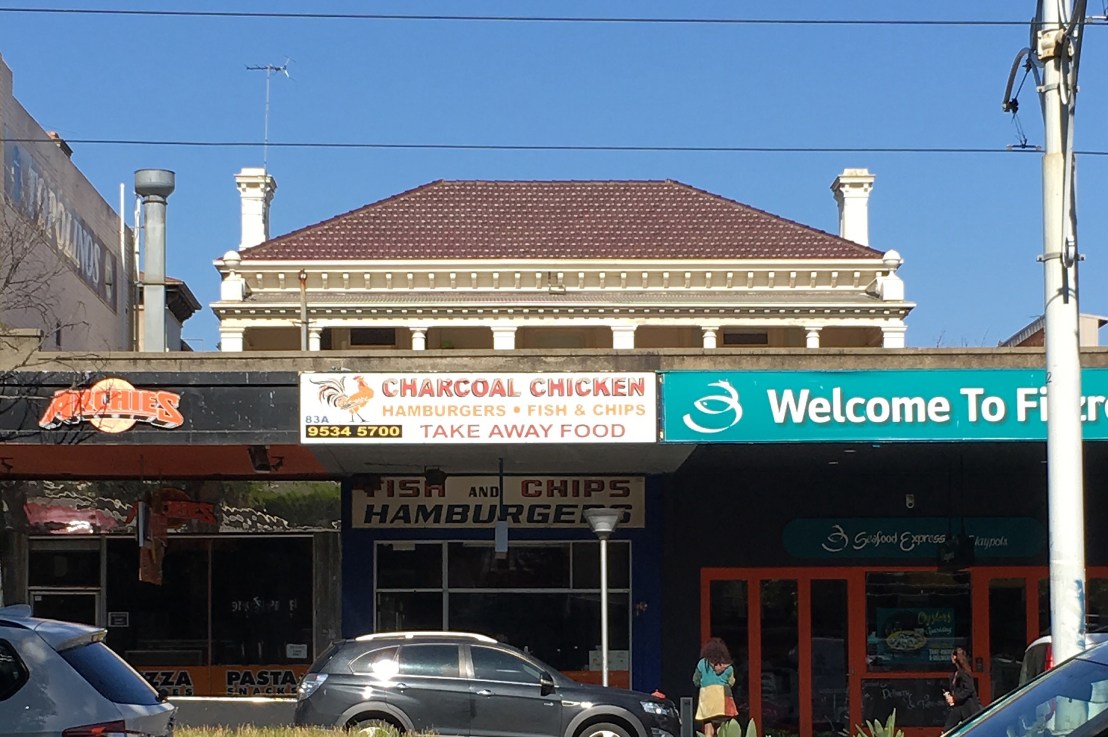
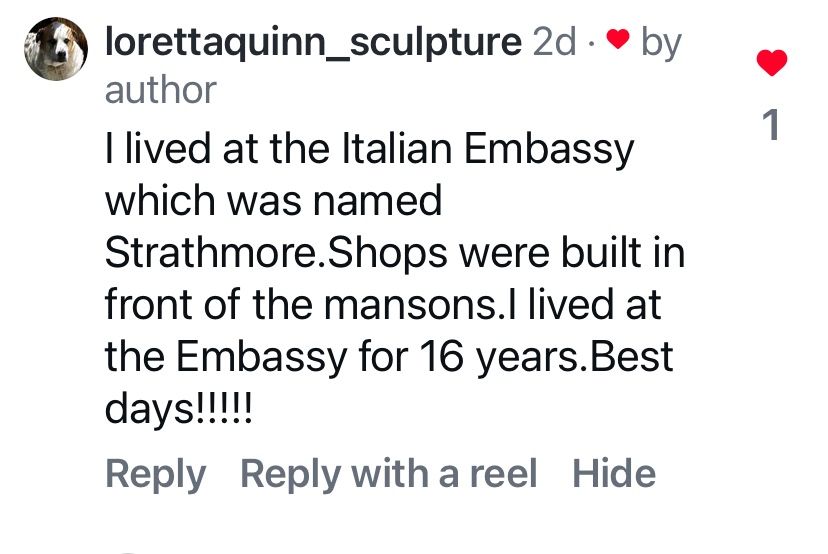
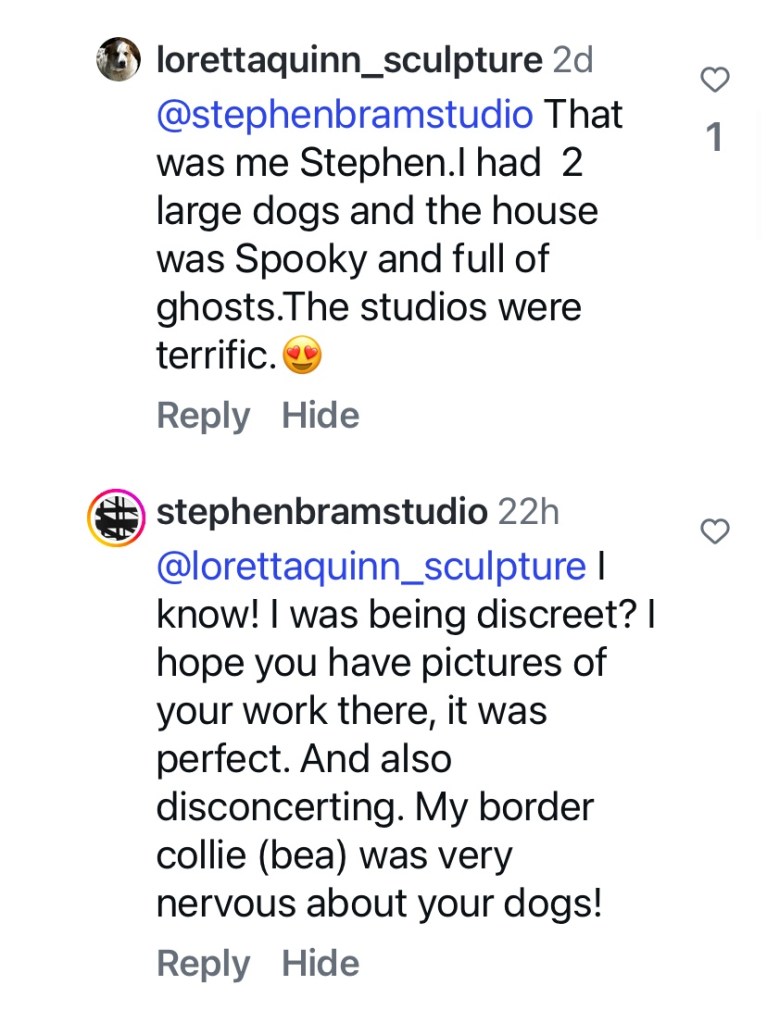
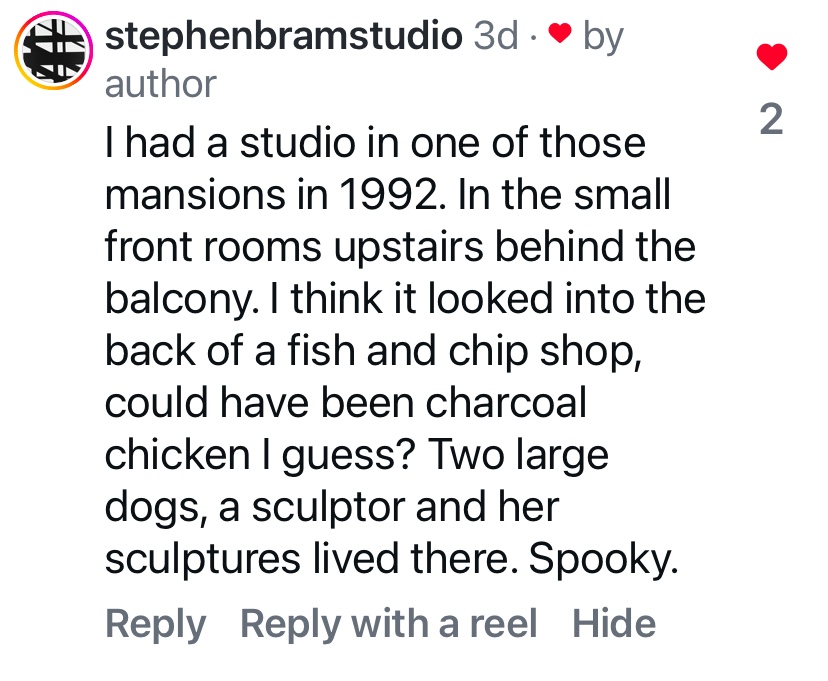
After a large site on Fitzroy Street near Grey Street was subdivided and sold in 1879, a row of six grand mansions were built, all a similar size, with matching garden setbacks. From the 1910s to the 1950s, they all disappeared behind shops built over the gardens, leaving some of them intact, and surprisingly four are still there – Canterbury /Brooklawn, Strathmore, Glenroy, and Aberdour. An urban legend says one or other was once the French Embassy, but this is quite untrue.
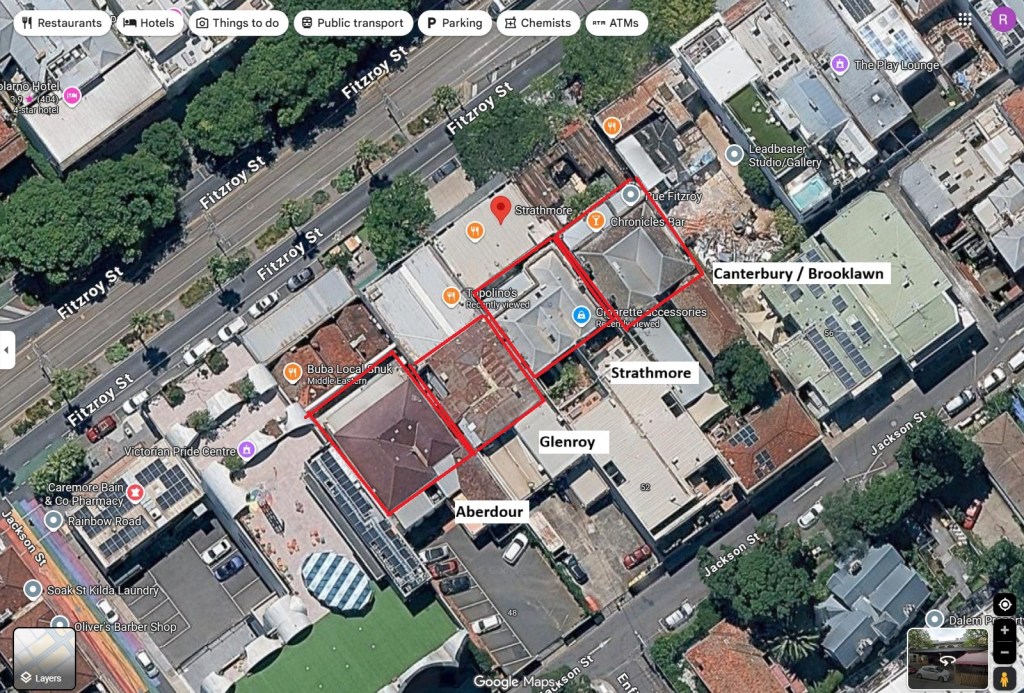
The most northern one was Canterbury (later Brooklawn), built in 1880, the subject of another post. It was partly revealed in the 1990s by removing one shop, but had lost some detail.
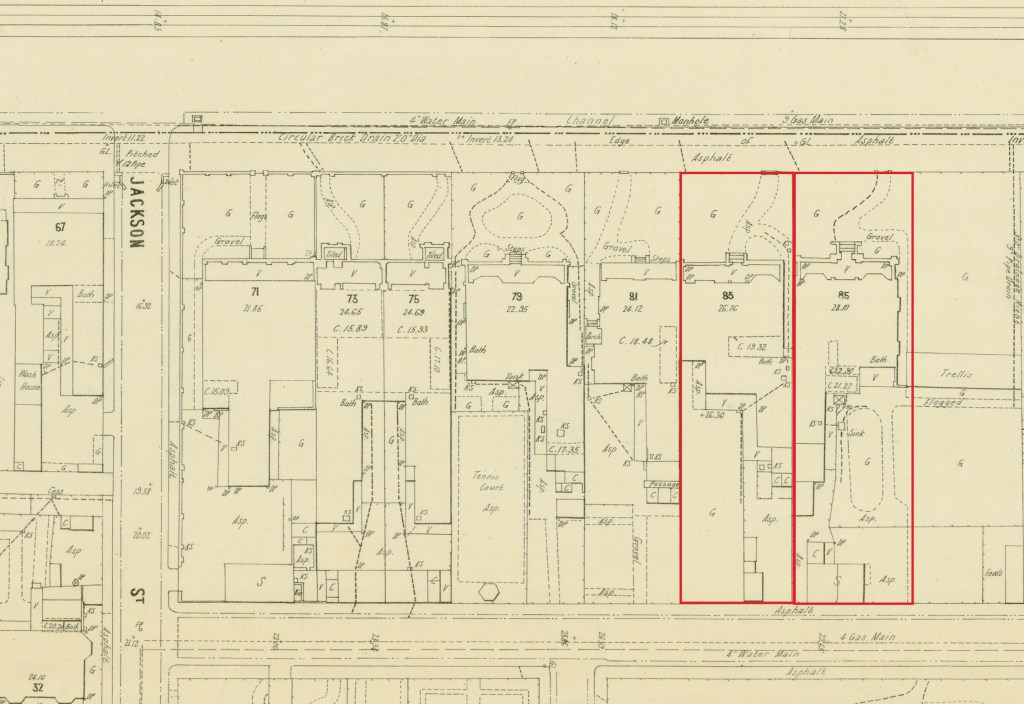
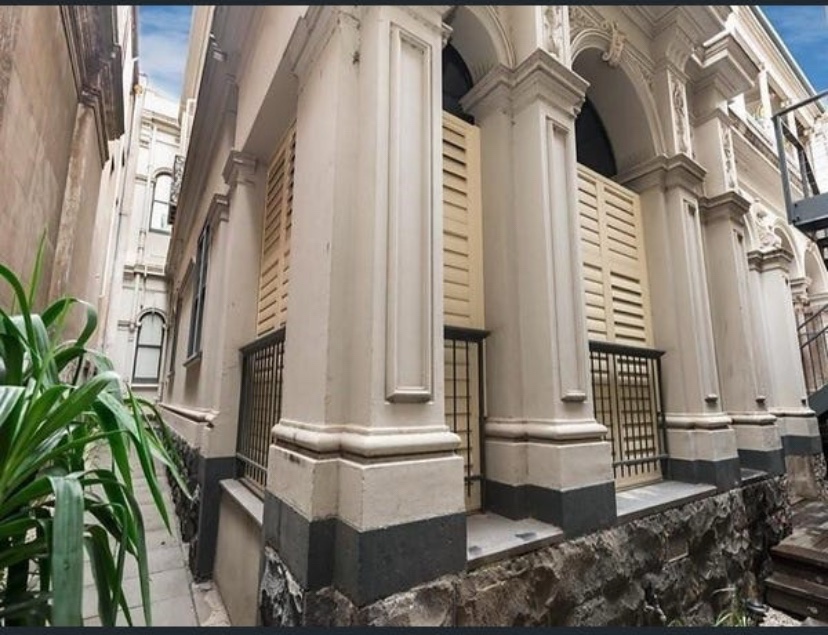
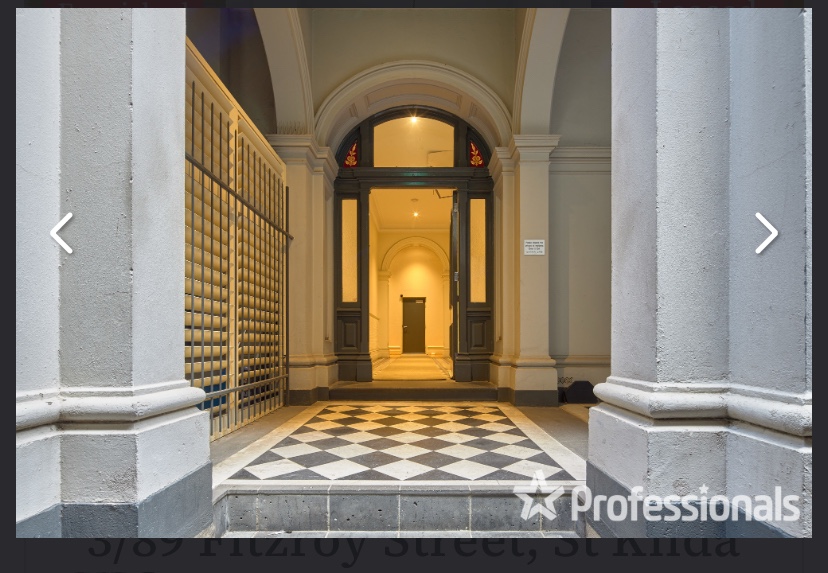
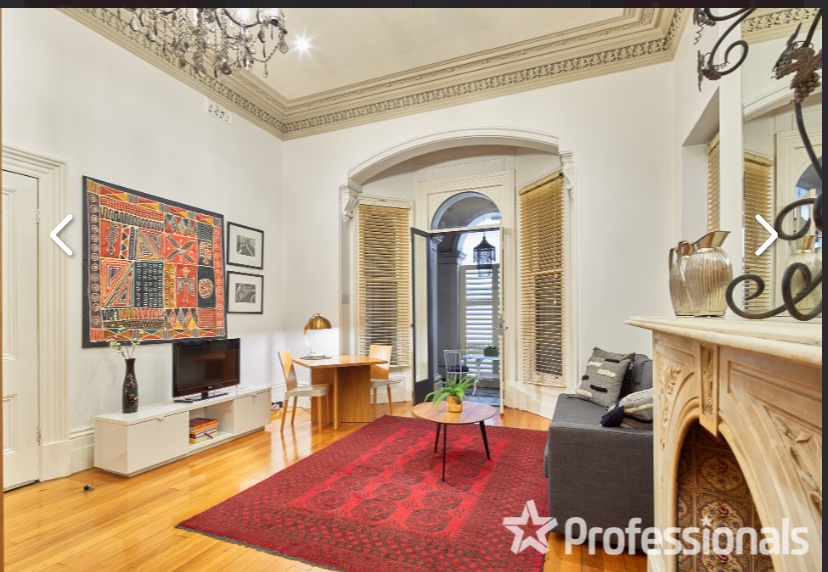
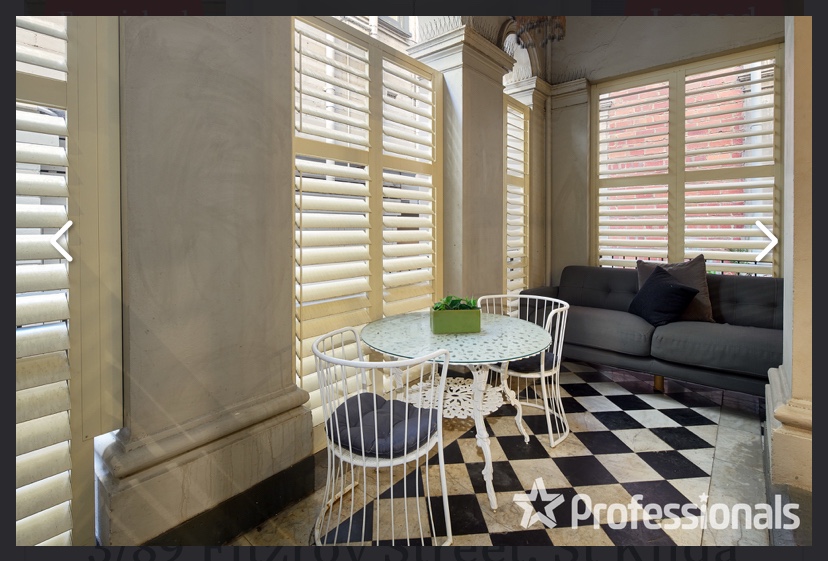
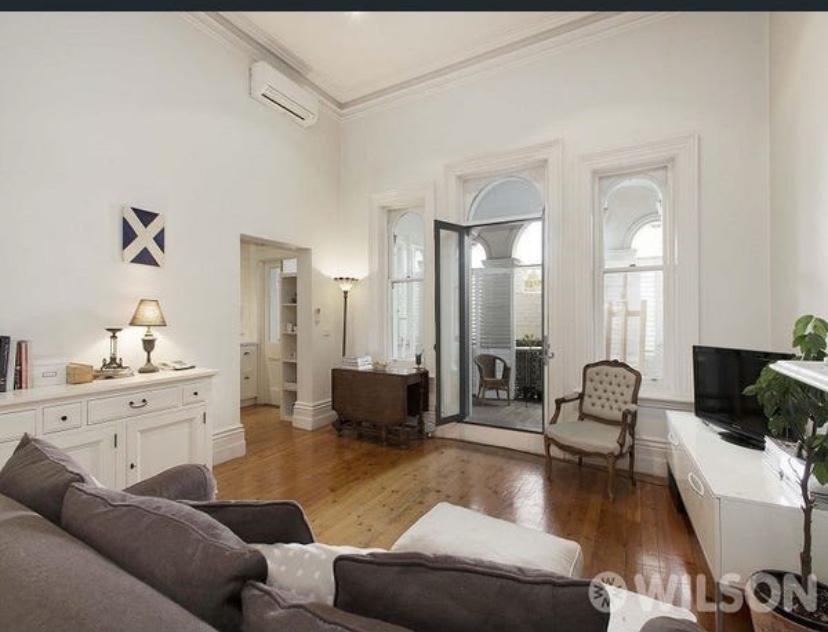
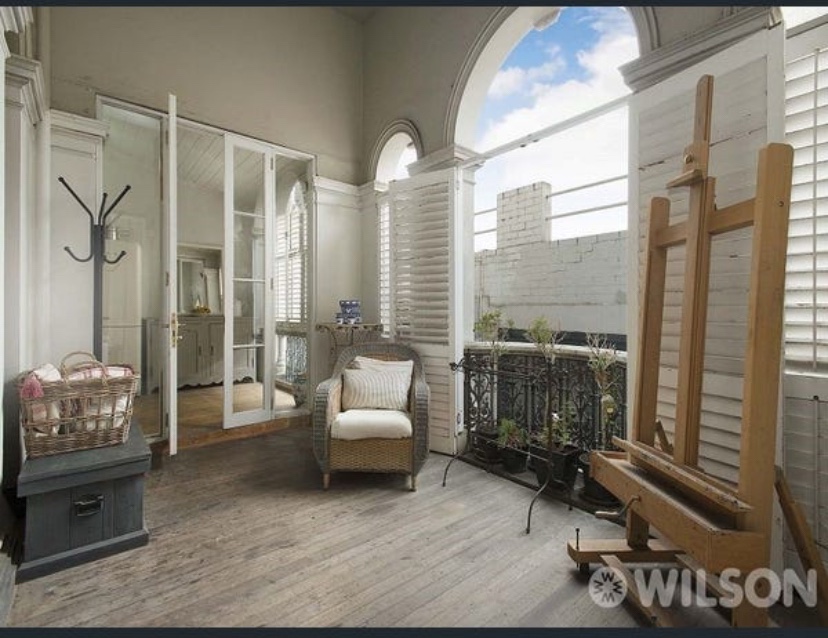
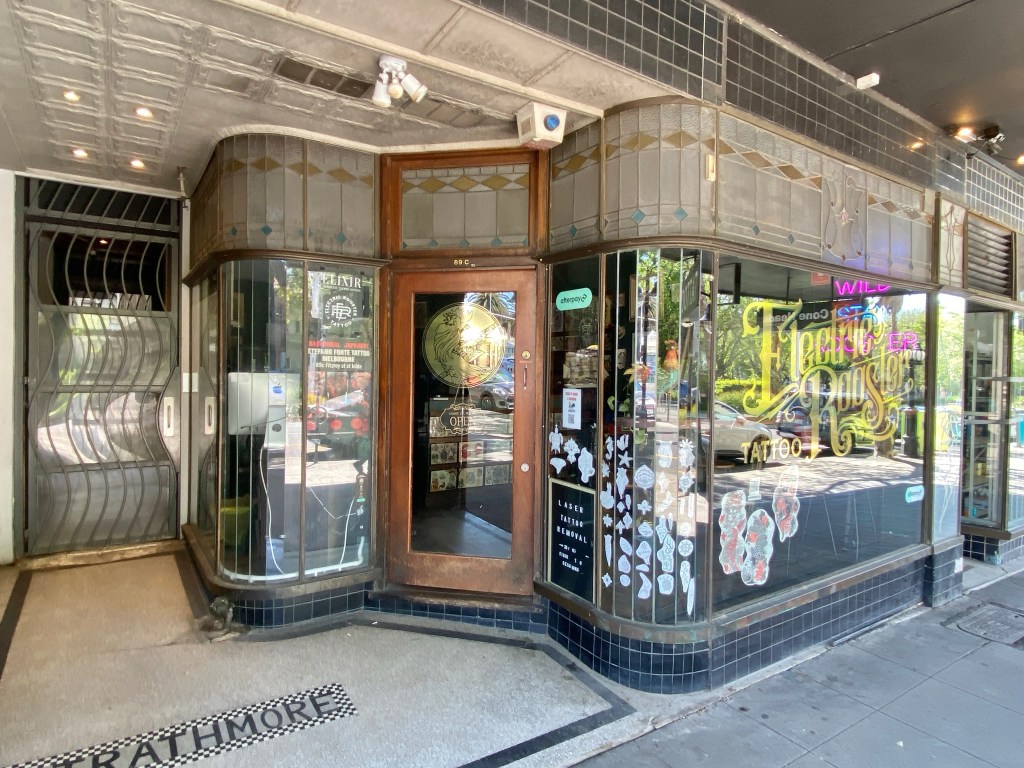
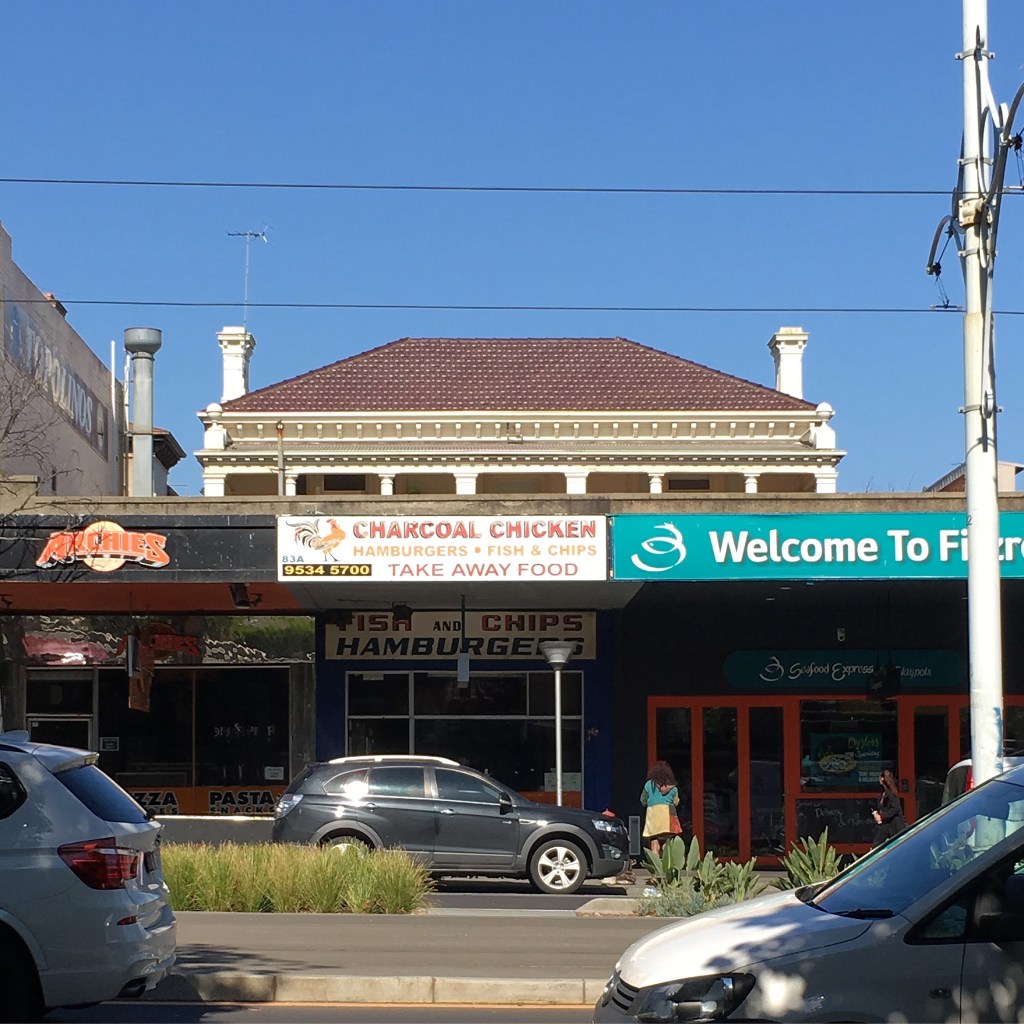
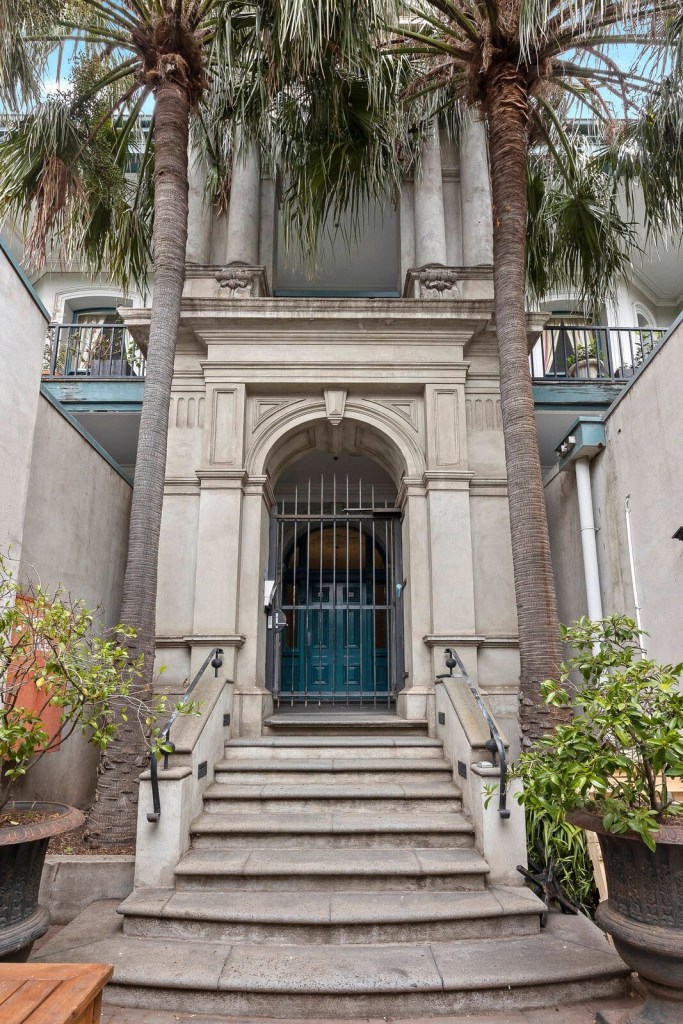
Next door turns out to be even more intact. Strathmore was built in 1880, designed by Henderson & Smart in a grand classical style, with an elegant first floor cast iron verandah. Real estate pics show a fine studio flat downstairs (but must be a bit dim) and a nice one bed upstairs.
It was divided into flats probably in 1931 when the Spanish style shops were built in the garden, but kept free of the mansion itself. There’s a nice shopfront, curving back to the new entrance. Both, along with the next four mansions, were run as Mrs Irvine’s Establishment from c1905 into WW1 – advertised as ‘Mansion Home for Permanent Boarders and Visitors’, at a time when St Kilda had become a place for a seaside holiday. Both these houses are graded significant, but neither of them has a detailed citation.
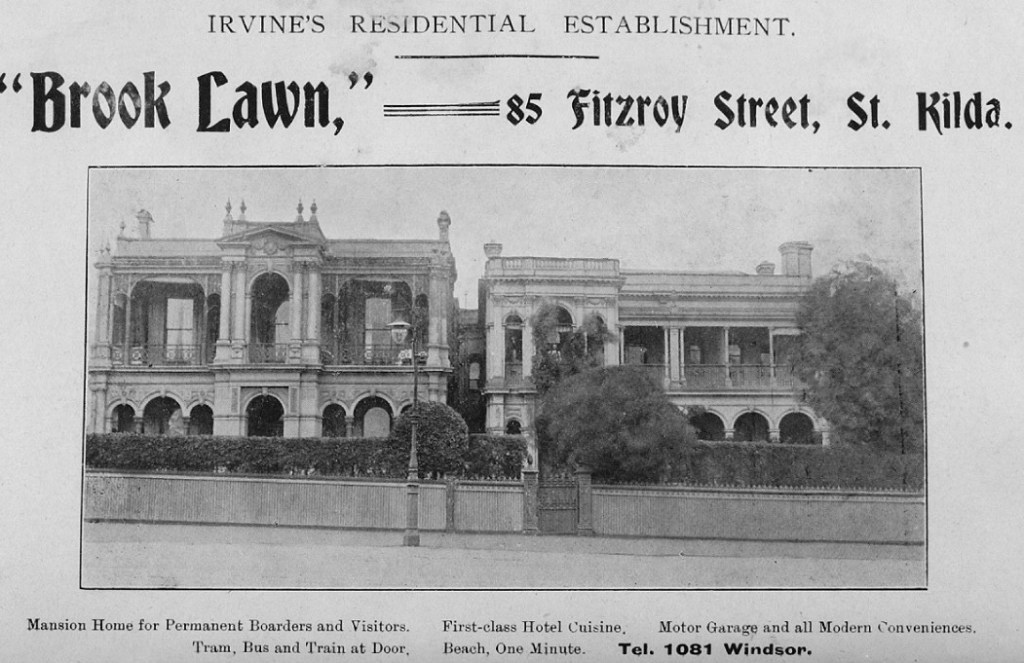
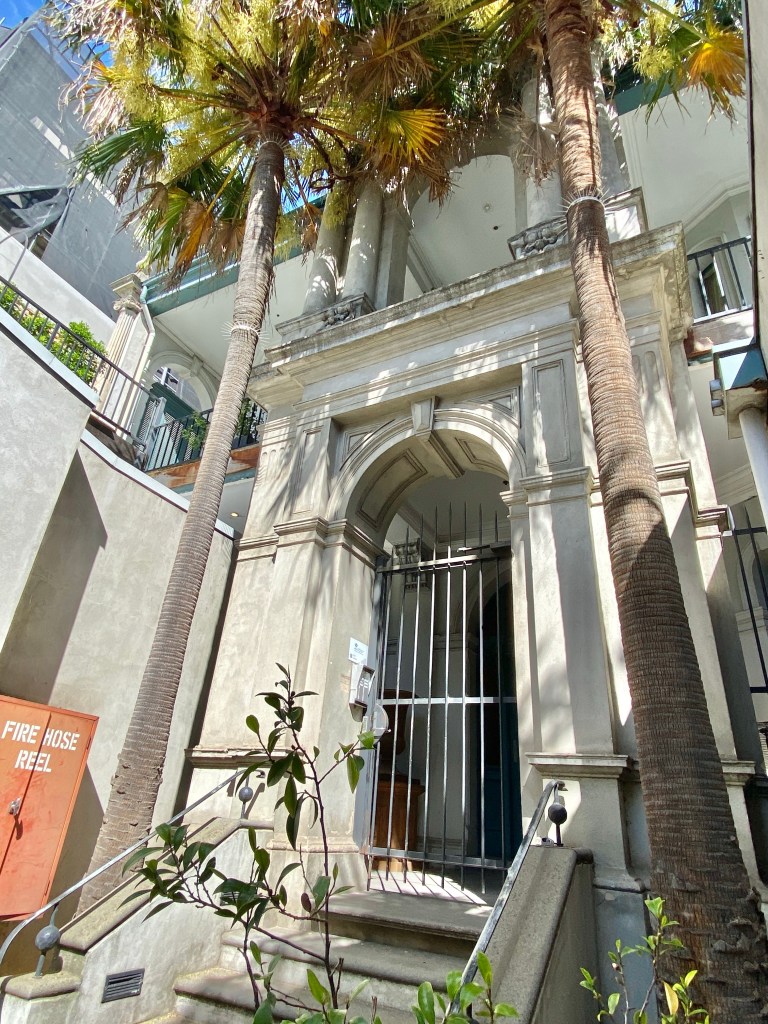
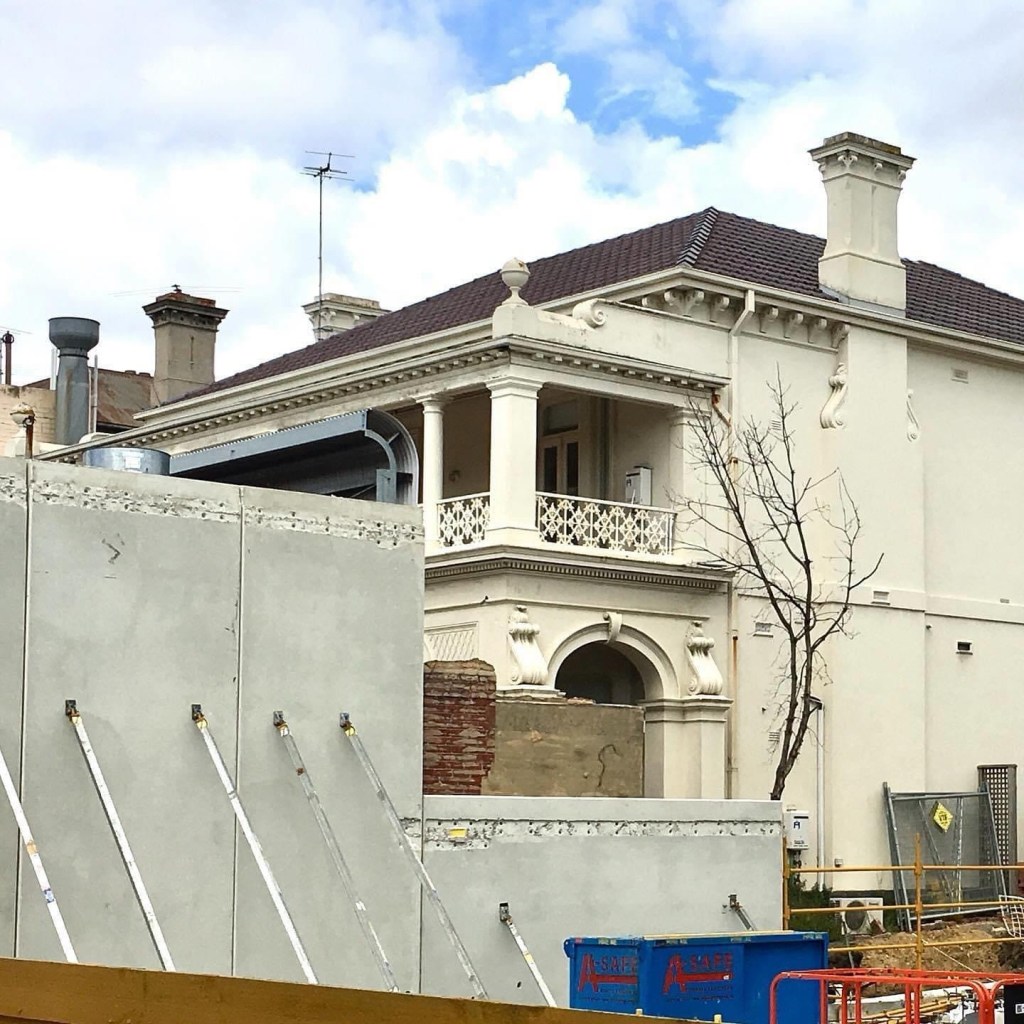
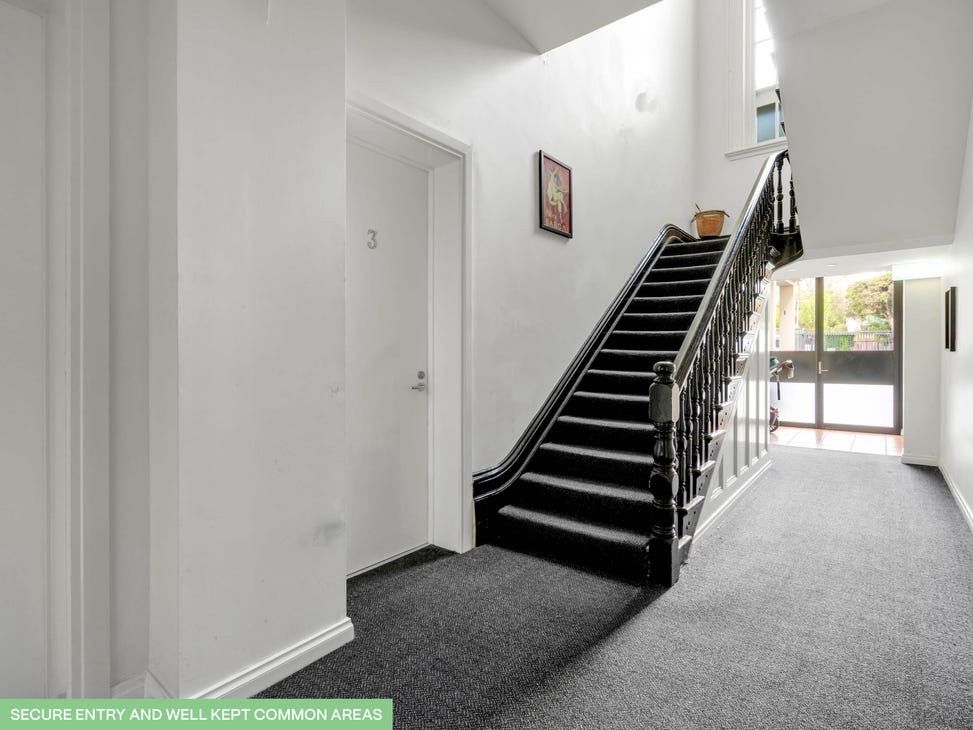
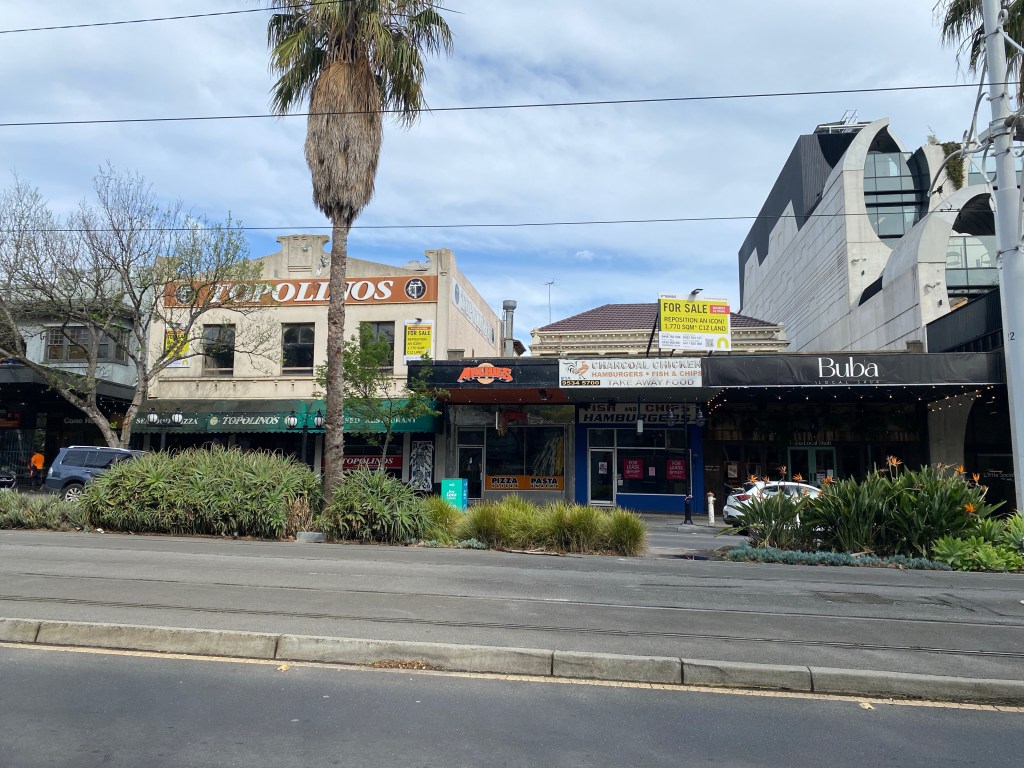
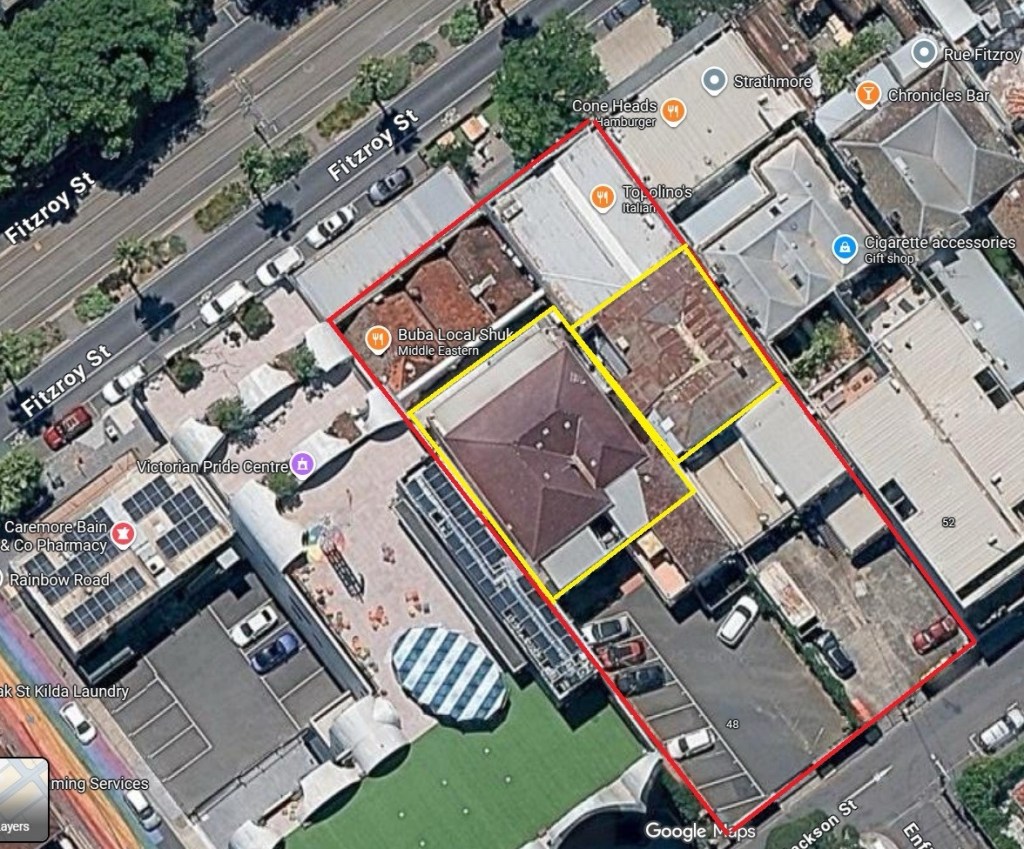
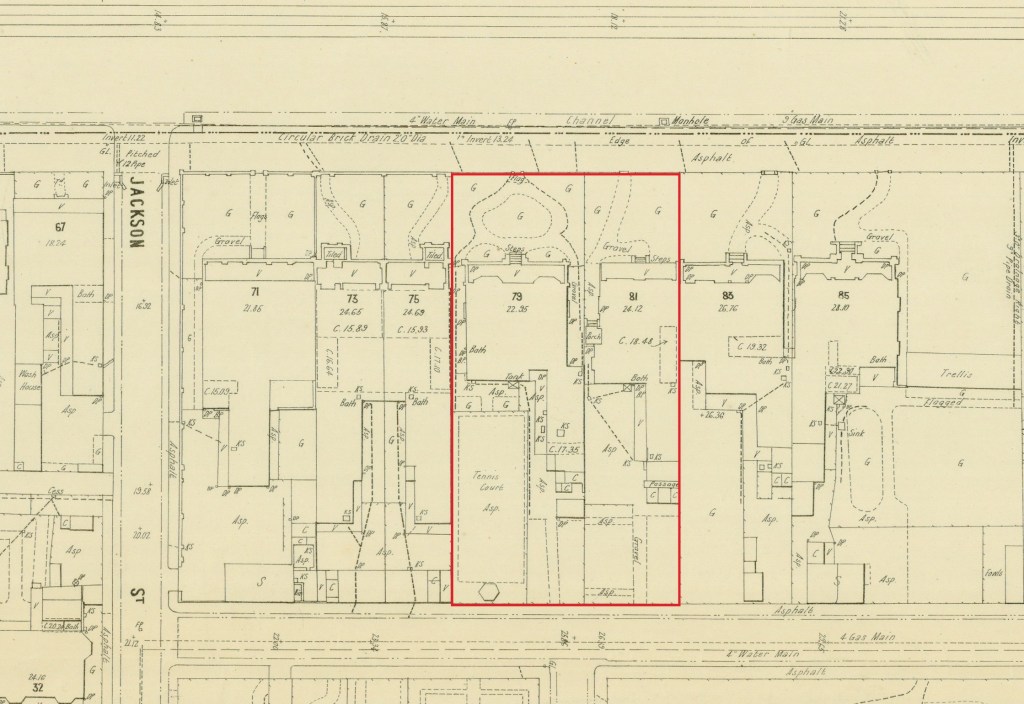
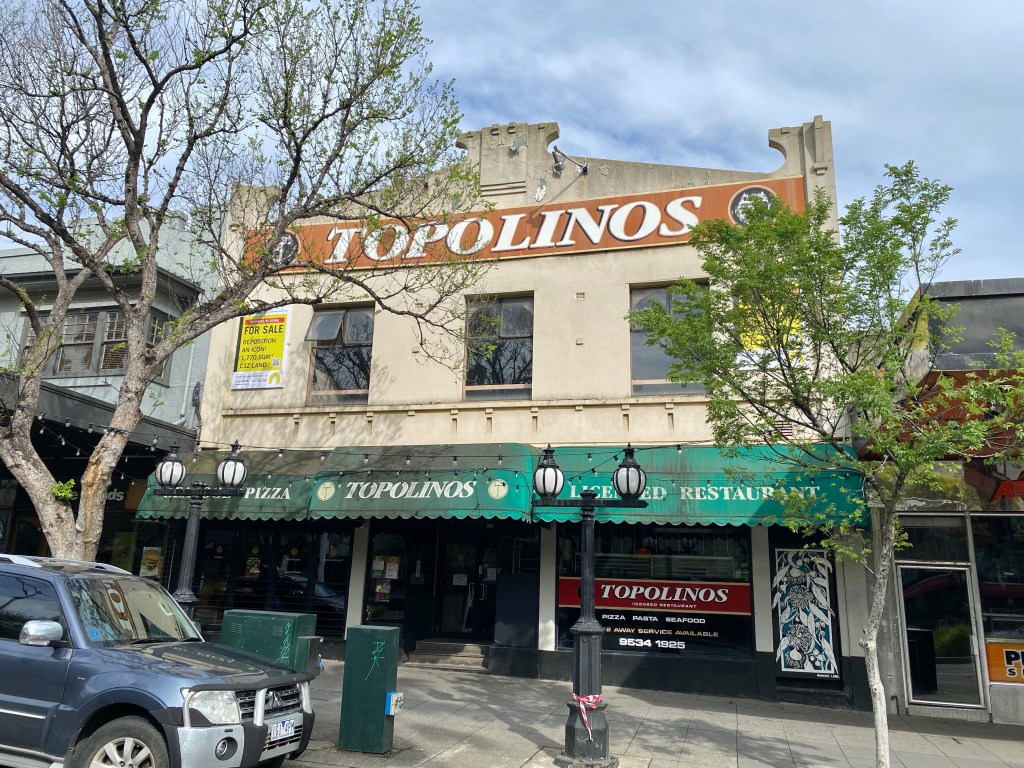
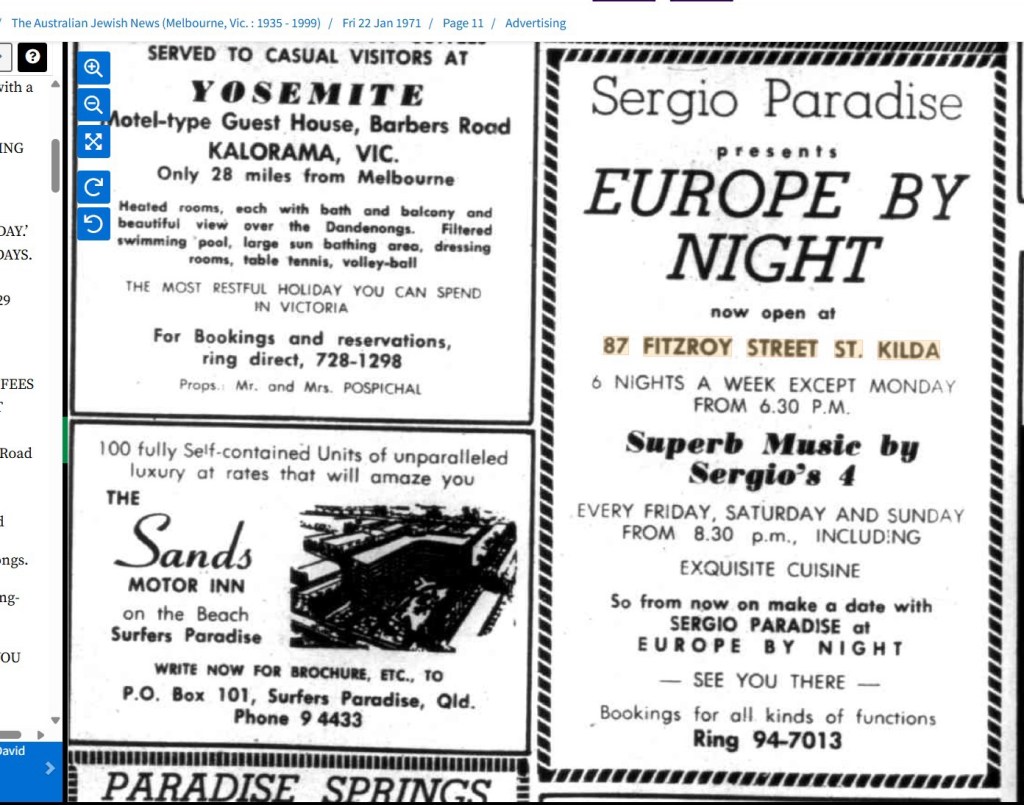
Topolinos in Fitzroy Street is going to close and go up for sale, along with the four shops next door – and behind them is a hidden mansion, which seems to be very intact ! See pic from when the Pride Centre revealed it a bit, and pic from 1914. The house seems to be flats, and the stairs are intact too. Wouldn’t it be nice if it was revealed again, like they did with Brooklawn a few doors up in the 90s ? (last pic).
This site is graded significant but there’s no research, apart from an article in the St Kilda HistoricalSociety newsletter, which tells me it was built in 1882, and originally called Aberdour. I can’t find an architect. In 1897 it was briefly occupied by the Italian consul.
By WW1, along with the two houses to the south it was a guest house, ‘Irvine’s Establishment’. In fact those houses and the three to the north including Brooklawn were all built at the same time to the same setback – you can just make them out in the fuzzy 1920s pic.
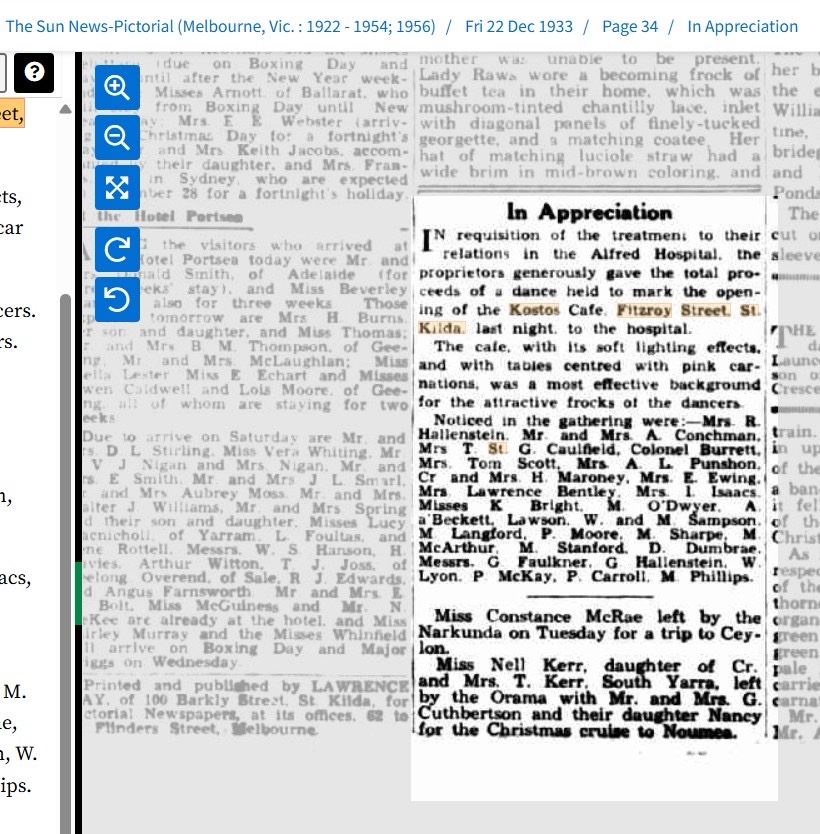
The house right behind Topolinos is still there too, it was called Glenroy, built 1882, no architect I can find. You can just see a corner of the eave, but it’s lost the verandah, and I think the ground floor is incorporated into the restaurant. The frontage was built probably in the 1920s, and it must have always been large, since they had dancing after it opened as Kostos Cafe in 1933. Later it had different names.
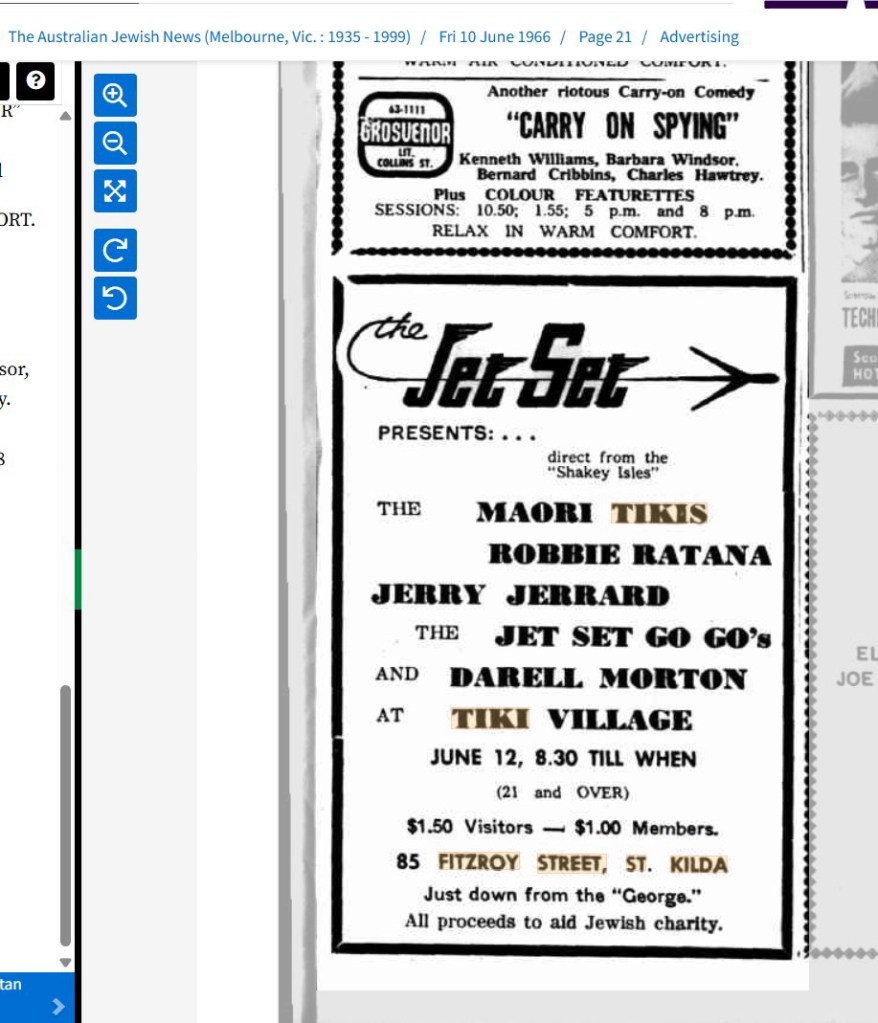
Topolinos started about 1972, been there 53 years ! It had and has a 24hr license, and so was a place to go for hospo workers after their shift, musos etc. Started by Mathew and Chris Forte, from Sicily, it’s Mathew who’s selling up. Ps just been told Topolino means ‘little mouse’ in Italian and is their term for Mickey Mouse !
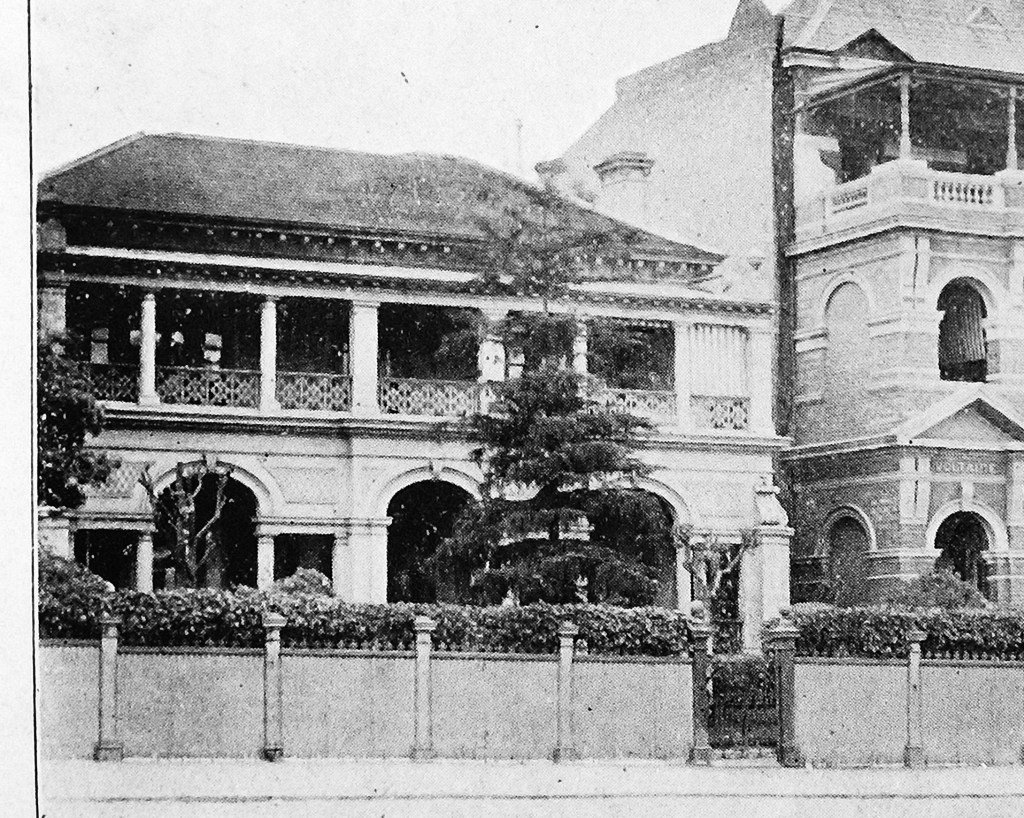
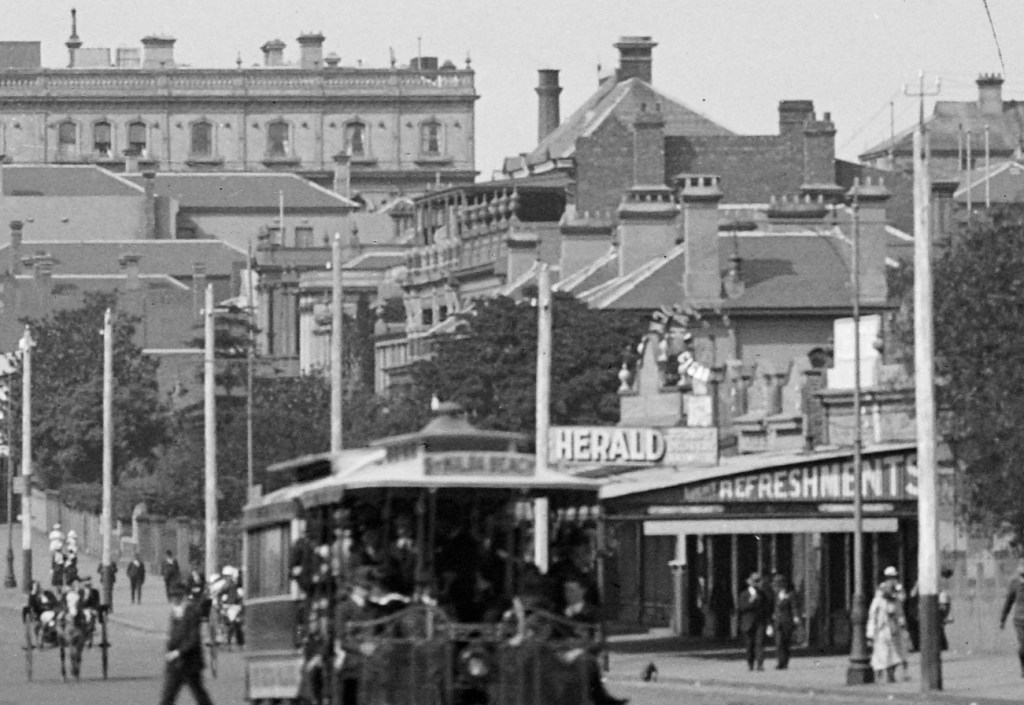
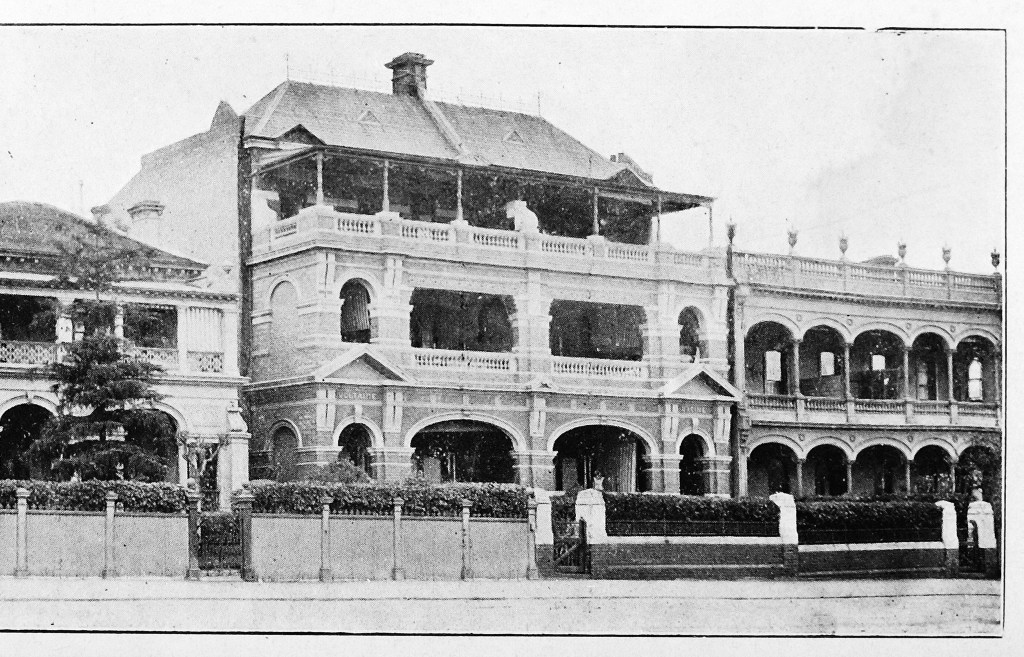
The next two mansions on Fitzroy Street, demolished long ago. The first one is where the Pride Centre is now, and was actually a pair of huge terraces, Voltaire and Racine, built in 1891 in a chunky Queen Anne style with a very open top floor verandah. The architect was Nahum Barnet, an early adopter of the style. By about 1905 they were operating as a single guest house by Mrs Irvine, and the photo is 1914, when she ran all six as one. I couldn’t find any other images.
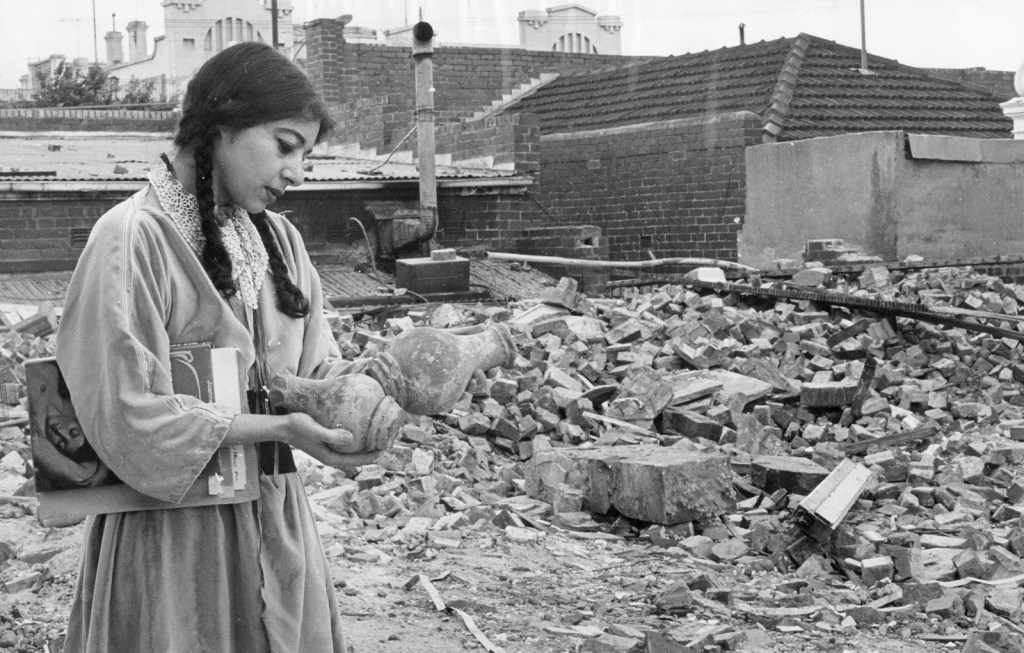
Pic 3 is Mirka Mora standing on the heap of rubble after it was demolished in 1968 (the family was living in and running Tolarno across the street) – she’s holding one of the balusters, and it’s captioned ‘in the ruins of the French Embassy’, which might be where the urban legend comes from. I couldn’t find any reference to an embassy or even a consul on Fitzroy Street – maybe she was prompted by the French literary names of the houses.
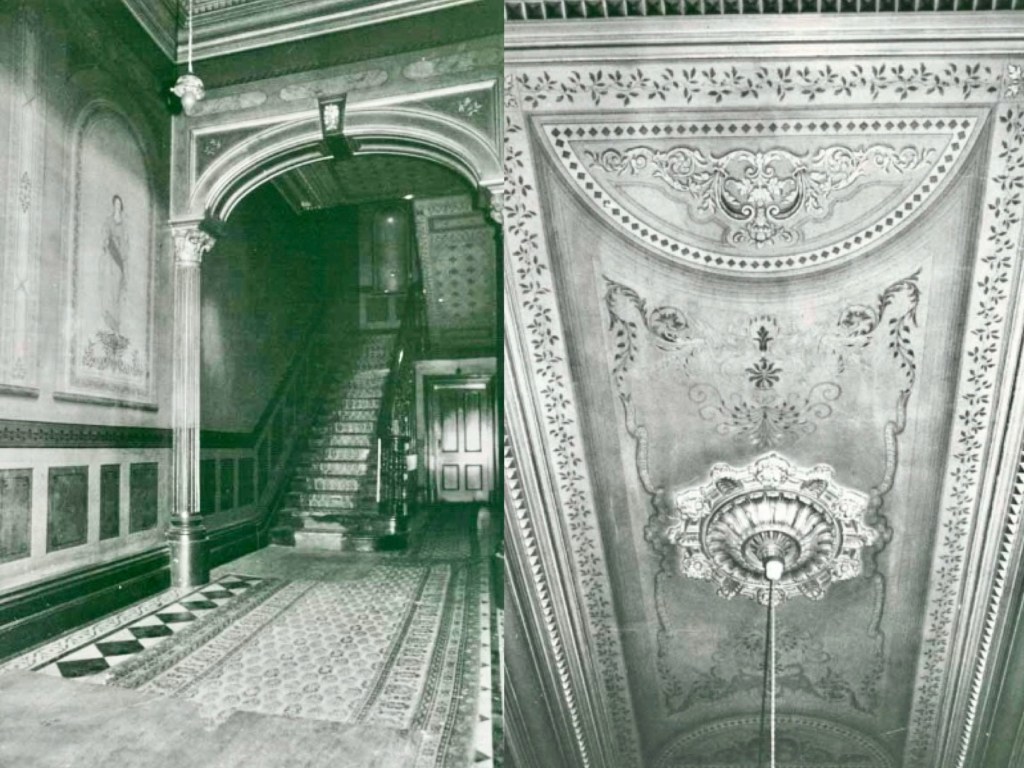
The one next door with the more conventional but still impressive arcaded verandah was called Scarborough, built 1884, architect Frederick Williams. Again this is the only photo, but the @nationaltrustvic file has three photos of the interior, which looked very elaborate indeed ! (though most mansions in Melbourne once had extensive painted decoration). It was demolished about 1970 for a bank, now my local chemist.
 Storey of Melbourne
I did quite a bit of research into the claim that it was the French Embassy quite some time ago, and although I’ve forgotten the detail, it was definitely not the the Embassy.
LikeLike
Definitely not !
LikeLike
Hi Rowan,
I’ve been a fan of your WordPress site and a subscriber for many years now and every now and then something pops up in regards to places or mansions that had / or have historic stained glass windows that I research.
This post of yours regards the hidden mansions along Fitzroy St in St Kilda pricked my interest particularly because of the old buildings and mansions in Fitzroy St. One thing I have always been left empty handed with is the old mansion portion at the back of the Tolarno Hotel which the famous artist Mirka Mora was associated with in the 60’s/70’s? In many articles I have read, the original mansion behind the Tolarno was originally built for a St Kilda Mayor (no citations or proof).
In my notes I have:
“…The Tolarno was built in the 1884, by a mayor of St Kilda, who in 1886, converted it into a genteel guesthouse, complete with croquet lawn on the front garden….”
“In 1928 (or 1933), a Modern rear wing of 29 bedrooms was added, designed by G.G. Cronin, for the owner S.C. Cronin which substantially all survives. The addition consists of 29 bedrooms, a larger dining room and kitchen. The house was renamed after the Tolarno Station, a pastoral property south of Menindee, on the Darling River in the Riverina, New South Wales. This property is depicted in the book Australia Unlimited. The connection between these two Tolarnos is not yet clear. ”
Extracted from Richard Peterson: “A Place of Sensuous Resort: Buildings of St Kilda and Their People” © 2005, St Kilda Historical Society Inc.
This maybe Octavius Frederick Wimpole as the mayor of St Kilda in this period?
“Mayor of the Borough of St. Kilda (1886-87) & “(c1873-c77 & c1884-88)”
The stairwell at the back of the Tolarno has a stained glass window depicting St George Slaying the Dragon. It’s the same cartoon used by David Relph Drape from the Ferguson & Urie stained glass company in 1876.
My own post and it’s extraordinary comparisons to the acid etched window at Werribee mansion is here: https://wp.me/p28nLD-1l9
Regards,
Ray
Ray Brown
rayjbrown@live.comrayjbrown@live.com
http://fergusonandurie.wordpress.com
LikeLiked by 1 person
Yes I think you’ve mentioned that window before ? I havnt researched Tolarno. Peterson’s work is probably the best source so far, but have you looked at the St Kilda historical society website?
LikeLike